
With us today is Luca Calaraili, a leading expert in large-scale construction and design with a deep understanding of the technologies and innovations shaping our industry. We’re here to discuss the critical situation facing the Hudson Tunnel Project, a monumental undertaking now on the brink of a complete shutdown. We’ll explore the administrative hurdles that have frozen billions in federal funding, the immediate human cost of a work stoppage for nearly a thousand workers, and the cascading economic consequences of delaying what has been called the most urgent infrastructure project in the country.
Federal disbursements were paused pending a review of the Disadvantaged Business Enterprise program. Could you walk me through the specific steps the Gateway Development Commission is taking to resolve this and what a successful resolution would look like to get funding restored?
The Gateway Development Commission is in an incredibly tough spot, navigating a complex administrative review while the clock is ticking. Right now, their primary focus must be on providing exhaustive documentation to the Federal Transit Administration to prove their Disadvantred Business Enterprise program is fully compliant. This means audits, reports, and likely intense, round-the-clock meetings to address every single concern the FTA has raised. A successful resolution, from their perspective, isn’t just about getting the funds turned back on. It’s about getting a clear, unambiguous green light from the FTA that confirms their program meets all federal mandates. The best-case scenario is a swift conclusion to the review this week, allowing the $12 billion in federal grants to start flowing again without any further interruptions, ensuring the project’s long-term stability.
With a potential work stoppage on February 6 threatening nearly 1,000 jobs, what is the immediate human and logistical impact? Please share some specific examples of how winding down active jobsites in both New York and New Jersey would unfold over the next week.
The human impact is immediate and devastating. You have nearly a thousand skilled tradespeople who were pouring concrete and building the future of regional transit just last week, and now they’re being told to prepare to go home. Imagine the foreman on the Hudson Yards Concrete Casing site, who just oversaw massive pours of over 7,200 cubic yards, now having to tell his crew their paychecks are stopping. Logistically, it’s a nightmare. You can’t just flip a switch. Heavy machinery needs to be secured, materials must be protected from the elements, and the sites themselves have to be made safe for a prolonged period of inactivity. This process involves demobilizing crews, canceling supply orders, and creating a detailed plan to preserve the work that’s already been done, like the 75% completed slurry wall at the Hudson County Access Shaft. It’s a slow, expensive, and demoralizing process.
Since October, the project has moved forward on credit, even hitting milestones like procuring tunnel boring machines. What financial strategies made this possible, and what specific metrics showed that this approach was becoming unsustainable, forcing the current ultimatum?
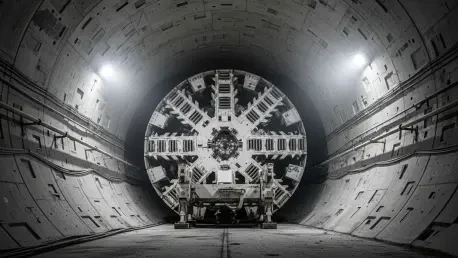
The GDC has been performing a high-wire act since October, essentially fronting the costs of construction by leveraging other available capital and credit lines. They were likely relying on the portions of the project funded by the states and the Port Authority—that $4 billion piece of the pie—to keep the cash flowing for daily operations. This allowed them to hit those impressive milestones, like finishing the Tonnelle Avenue bridge and even procuring two massive tunnel boring machines. However, that kind of spending has a burn rate you can measure daily. The metric that screamed “unsustainable” would have been their rapidly dwindling cash reserves against their fixed operational costs and contractual obligations to firms like Tutor Perini. When they looked at the calendar and saw their accounts nearing zero before the next major payment milestone, they realized they couldn’t fund the work on credit indefinitely. That’s when the ultimatum became not just a strategy, but a necessity.
Beyond the immediate halt, an extended pause puts 11,000 jobs and contracts for the New Jersey Surface Alignment at risk. Can you describe the cascading effect this delay would have on the project’s overall timeline, budget, and supply chain over the next year?
An extended pause would be catastrophic, creating a domino effect that ripples through the entire project and the regional economy. First, you have the timeline. Every day of delay adds more than a day to the end date because remobilizing a project of this scale is incredibly complex and time-consuming. You can’t just call 11,000 people back to work overnight. This delay inflates the budget through added security costs for idle sites, potential penalties, and the rising cost of materials and labor over time. The supply chain would be thrown into chaos. Contracts for the New Jersey Surface Alignment, which were ready to go, can’t be awarded. That means steel fabricators, concrete suppliers, and specialty contractors who were counting on that work are now in limbo, which could impact their own financial stability and their ability to serve other projects. The whole ecosystem built around this $16 billion endeavor starts to crumble.
The New York Building Congress called this a “four-alarm fire” and urged that infrastructure not be seen as political. From your perspective, what are the most effective arguments for ensuring massive, multi-state projects like this are insulated from administrative and political disputes?
The “four-alarm fire” analogy is perfect because it conveys the urgency and the widespread damage this can cause. The most compelling argument for insulating these projects from politics is to frame them not as expenditures, but as essential investments in our national economic security and competitiveness. We need to emphasize that a tunnel isn’t Democratic or Republican; it’s a vital artery for commerce and commuters. You do this by constantly highlighting the real-world numbers: the $19.6 billion in economic activity, the tens of thousands of jobs, the reliance of the entire Northeast corridor on this single crossing. Another powerful argument is certainty. The construction and finance industries thrive on it. When a project of this magnitude can be halted by an administrative review, it sends a chilling message to the private sector and international partners that U.S. infrastructure is an unstable, high-risk investment.
What is your forecast for the Hudson Tunnel Project?
My forecast is one of cautious optimism, but the immediate future is fraught with tension. I believe the sheer economic and political pressure from all sides—the states, the industry, and the public—will force a resolution before a catastrophic, long-term shutdown occurs. The project is simply too big and too important to fail. However, I predict this event will serve as a painful lesson, leading to stronger agreements and financial backstops in the future to protect critical infrastructure from being derailed by administrative whims. We will likely see construction resume, but this “four-alarm fire” will leave scars in the form of budget adjustments and schedule delays that will need to be managed for years to come.