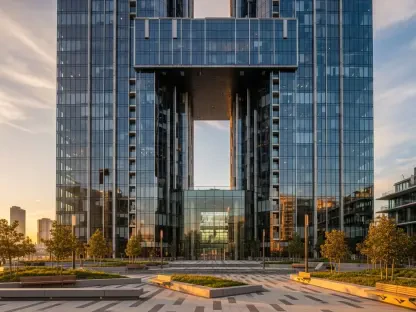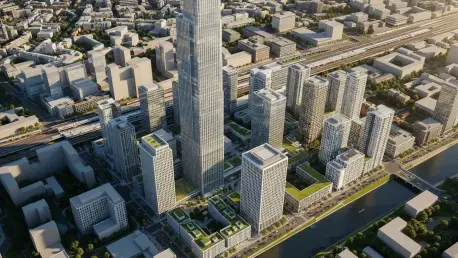

The skyline of Cardiff is undergoing a radical metamorphosis as the city transitions from its historical low-rise roots into a modern metropolitan powerhouse defined by vertical ambition and architectural innovation. This shift is epitomized by the recent approval of a fifty-story residential tower at Central Square, a project led by London-based developer BlueCastle Capital. Standing at a staggering one hundred seventy-eight meters, or five hundred eighty-four feet, this structure is poised to become the tallest building in Wales and the second-tallest in the United Kingdom outside of London. Situated on the strategically vital Plot Five near Cardiff Central Station and the iconic Principality Stadium, the development represents a massive scale-up from previous urban planning proposals. It signals a new era of confidence in the regional real estate market, reflecting a desire to create a landmark that rivals the heights of Manchester’s Deansgate Square while anchoring the city’s economic center.
Redefining Residential Density through the Build-to-Rent Model
This ambitious project is designed as a flagship build-to-rent scheme, a sector that has seen an explosion of interest and capital as urban dwellers increasingly prioritize flexibility and service over traditional homeownership. With five hundred twenty-eight high-quality apartments, the tower is not merely a residential block but a self-contained ecosystem designed to cater to the modern professional lifestyle. The inclusion of a two-story pavilion dedicated to commercial and restaurant use ensures that the ground-level experience remains vibrant and integrated with the surrounding streetscape. Residents will have access to premium amenities that were once the exclusive domain of luxury hotels, including a comprehensive wellness area, a state-of-the-art gym, and specialized co-working spaces. By blending living and working environments, the development addresses the evolving needs of a workforce that values proximity to transportation hubs and high-end leisure facilities within their own building.
Beyond the standard residential offerings, the architectural design incorporates a rooftop terrace that provides panoramic views of the Bristol Channel and the surrounding Welsh landscape, offering a unique communal space for the city’s inhabitants. This focus on shared environments is complemented by a dedicated bike hub, reflecting a commitment to sustainable urban mobility and reducing the reliance on private vehicles within the congested city center. The project represents a significant evolution from the original thirty-five-story plan, indicating that developers now view Cardiff as a city capable of supporting much higher densities than previously imagined. This confidence is supported by the massive influx of investment into the build-to-rent sector, which reached nearly four point seven billion pounds in recent cycles. By maintaining long-term ownership and management of the site, BlueCastle Capital ensures that the quality of the building remains high, fostering a stable community.
Strategic Investment and the Rise of Regional Business Hubs
The developer’s aggressive expansion strategy highlights a broader trend where regional cities like Leeds, Birmingham, and Sheffield are becoming focal points for large-scale institutional investment. BlueCastle Capital currently manages a development pipeline exceeding one point one billion pounds, encompassing approximately two thousand five hundred new homes across these key urban centers. This strategy emphasizes a transition away from the quick-turnover model of traditional property development toward long-term asset management and sustainable growth. By controlling every aspect of the process, from site acquisition to long-term tenancy, the firm positions itself as a permanent stakeholder in the city’s future. In Cardiff, the acquisition of the Central Square site for an estimated fifteen million pounds from local developers underscores the premium value placed on locations that offer direct connectivity to major employment centers like the BBC Wales headquarters and the regional offices.
Central Square has successfully established itself as a premier employment and residential hub, drawing in thousands of professionals who require modern housing solutions that match their career trajectories. The introduction of high-density residential options at this scale is a direct response to the increasing demand for centralized living spaces that minimize commute times and maximize lifestyle convenience. Local stakeholders, including the Cardiff Council, have recognized that such vertical expansion is essential for the city to remain competitive on a national stage. While the final capital costs and the exact commencement date for construction are often kept under tight wraps, the symbolic importance of the tower cannot be overstated. It serves as a testament to the rising economic status of the Welsh capital and its ability to attract global talent. This project sets a new benchmark for future developments, encouraging other investors to consider the potential of the Cardiff skyline.
Urban Planning Legacies: Moving Toward a Vertical Future
The approval of this landmark tower marked a pivotal moment in the history of Welsh architecture, fundamentally altering the way city planners approached high-density residential design. It established a precedent for balancing aesthetic ambition with the practical needs of a growing urban population, ensuring that the skyline reflected the city’s economic vitality. Future developments in Cardiff were encouraged to adopt similar integrated models, where commercial, leisure, and residential functions coexisted within a single structure. City officials learned that prioritizing pedestrian-friendly infrastructure and sustainable transport links was essential for supporting such massive vertical growth. As the city continued to evolve, the focus shifted toward ensuring that these towering structures contributed positively to the local microclimate and community identity. Investors and urban designers looked to this project as a blueprint for creating resilient urban environments.
The focus on long-term sustainability and asset management transitioned from a luxury to a necessity, prompting developers to integrate renewable energy solutions and smart building technologies into their initial designs. This shift allowed Cardiff to avoid the pitfalls of rapid, unplanned urbanization, instead favoring a structured approach that prioritized the well-being of residents and the environment. Practical next steps for the industry involved the standardization of green building certifications for high-rise residential projects and the implementation of more robust community engagement strategies during the planning phases. By observing the impact of the Central Square tower, other regional cities gained valuable insights into how vertical growth could be leveraged to revitalize underutilized industrial zones. This project ultimately proved that strategic height and density, when managed with a long-term vision, could serve as a catalyst for broader social and economic prosperity across the United Kingdom.