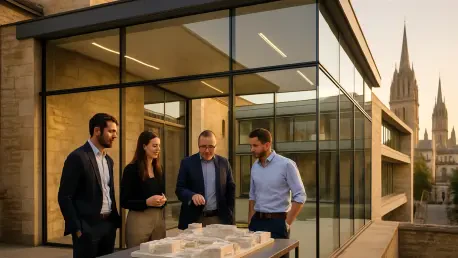

The architectural silhouette of Oxford is shifting as the demand for cutting-edge laboratory space begins to rival the historic prominence of its ancient colleges. This transition represents a significant moment for the city, where the pressure to accommodate a booming life sciences sector meets the rigid constraints of a medieval urban layout. The recent formation of the British Council for Offices (BCO) Oxford regional committee serves as a formal recognition that the city’s commercial real estate needs have become too complex for general regional oversight.
A Strategic Shift: The City of Dreaming Spires
Oxford is currently witnessing a transformation where historic prestige meets a high-velocity surge in commercial demand. The appointment of Guy Parkes from Vail Williams to the newly formed BCO Oxford regional committee is a signal that the office market has reached a critical tipping point. As the city transitions from a traditional academic center to a global powerhouse for science and technology, this new committee stands as the architect of its future physical workspace.
This evolution is driven by the necessity to harmonize the aesthetic legacy of the university with the aggressive infrastructure requirements of modern tech firms. The committee acts as a localized engine for change, ensuring that the city does not just grow, but matures into a structured commercial hub. By concentrating expertise within a specific sub-committee, the BCO acknowledges that Oxford’s trajectory is now distinct from the broader South West region.
Why a Dedicated Oxford Committee Matters Now
The decision to carve out a specific Oxford sub-committee reflects the city’s unique economic trajectory. With a vacancy rate that remains incredibly low and a relentless demand for specialized lab and research spaces, Oxford requires a more nuanced approach than general regional oversight can provide. By establishing a local leadership team, the BCO acknowledges that Oxford’s challenges require hyper-local expertise and a dedicated platform for collaboration.
This localized focus allows for a more agile response to planning constraints and the specific spatial needs of high-growth firms. Rather than following broad national trends, the committee can address the granular realities of the “Golden Triangle.” Such a specialized body ensures that the local property market remains competitive on a global scale while protecting the unique character of the city.
Driving Innovation: Collaborative Design
The committee’s primary mission is to bridge the gap between developers, architects, and the occupiers who drive Oxford’s economy. This involves moving beyond the standard desk-and-cubicle setup to create hybrid environments that support both rigorous research and creative collaboration. By organizing targeted events and site tours that showcase exemplary workplace designs, the group sets a new benchmark for regional property standards and commercial “buzz.”
Sustainability and modernization also sit at the heart of this collaborative effort. There is an urgent need to retrofit older building stock to meet modern environmental standards without compromising architectural heritage. Additionally, the NextGen initiative within the committee aims to develop a pipeline for early-career professionals, ensuring that the next generation of property leaders is equipped to handle the market’s inherent complexities.
Leveraging Expertise: Decades of Regional Insight
The committee’s influence is anchored by the deep-rooted experience of its founding members. Guy Parkes brings over 30 years of regional insight and academic connections, providing a vital link between university research and the commercial real estate required to house it. Alongside leaders from Savills and Kier Construction, this group represents a trifecta of consultancy, agency, and delivery that ensures the BCO’s influence is grounded in practical realities.
This collective knowledge base is essential for navigating the high costs of construction and the intricacies of land acquisition in a land-constrained environment. Because these leaders understand the intersection of public and private interests, they are uniquely positioned to facilitate developments that serve both the local community and international investors. Their combined perspective transforms theoretical design into functional, high-value assets.
Navigating the Future: Oxford’s Commercial Landscape
To capitalize on this new leadership, stakeholders should align their strategies with the committee’s emerging focus areas. Developers should prioritize flexible laboratory integration, creating “plug-and-play” spaces that allow startups to scale without the friction of heavy infrastructure investment. Engaging with the BCO knowledge network will also allow local firms to leverage research tools that keep their assets competitive against those in London or Reading.
Strategic asset management now requires a focus on connectivity and talent retention. Creating workplaces that act as social hubs utilizes Oxford’s unique urban fabric to attract the global talent that life science firms require. Owners should look at their holdings as part of a wider strategic corridor, adopting a proactive stance that bridges major regional markets. Looking forward, the focus shifted toward sustainable density and the integration of digital infrastructure to ensure Oxford remained a premier destination for global innovation.