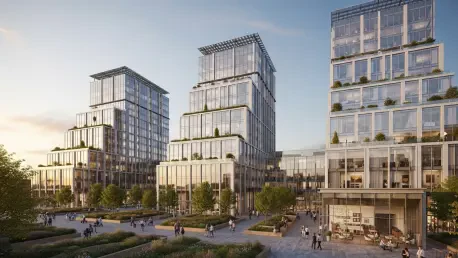

The chronic shortage of affordable student accommodation in central London has reached a critical juncture, forcing thousands of scholars to navigate an increasingly volatile and predatory private rental market. In response to this systemic challenge, the London School of Economics and Political Science has joined forces with Bouygues UK and the infrastructure investment firm Equitix to deliver a transformative residential project at Bankside House. Located at 24 Sumner Street, just a stone’s throw from the iconic Tate Modern, this development represents a massive shift from traditional student housing toward a model of civic architecture that integrates with the cultural fabric of Southwark. By replacing a mid-century office conversion with a purpose-built complex, the partners aim to provide nearly 2,000 new bed spaces. This strategic intervention is designed to alleviate the pressure on local housing stocks while providing a world-class living environment that fosters academic excellence and social cohesion within the heart of the capital city.
Architectural Innovation and Urban Integration
The architectural vision for the new Bankside House, crafted by the renowned firms Carmody Groarke and Sheppard Robson, seeks to redefine the skyline of the Southwark district through a sophisticated tiered design. Instead of a monolithic block, the plan features three stepped towers reaching heights of 24, 26, and 28 stories, which are interconnected by two lower-rise pavilions. This configuration is a deliberate attempt to minimize the visual density of the structure while maximizing the penetration of natural light and offering expansive views of the city for the residents. By utilizing a varied height profile, the architects have managed to create a sense of movement and elegance that respects the historical context of the area. This approach ensures that the building does not overwhelm its neighbors but rather contributes a modern aesthetic that complements the surrounding urban environment. The design moves away from the insular nature of older dormitories to embrace a more open and inviting form.
Furthermore, the ground-level layout is central to the project’s philosophy of creating a porous boundary between the university population and the wider public. The inclusion of active frontages and newly established pedestrian pathways will connect Sumner Street directly to the broader Bankside cultural quarter, facilitating a more natural flow of foot traffic. Landscaped courtyards and car-free public spaces are integrated into the site to encourage interaction and provide a serene escape from the bustling city streets. This design strategy effectively transforms a private residential development into a welcoming urban hub, fostering a sense of community and belonging that is often missing in high-density student housing. By prioritizing accessibility and public engagement, the development team is ensuring that the complex becomes a vital part of the local infrastructure. The project demonstrates how modern educational facilities can serve as bridges between academic life and the cultural vitality of the host city.
Setting New Benchmarks for Sustainability
Environmental stewardship remains a cornerstone of the Bankside redevelopment, with the project striving to achieve the highest standards of energy efficiency and ecological responsibility. The development is targeting a BREEAM Excellent rating, with aspirations to reach the Outstanding category, while strictly adhering to the rigorous Passivhaus standards for operational energy performance. This level of commitment requires exceptional insulation, high-performance glazing, and superior airtightness to minimize the building’s overall carbon footprint. As an all-electric facility, the complex will move away from fossil fuel reliance, utilizing extensive arrays of rooftop solar panels to generate a significant portion of its own renewable energy. This focus on long-term operational efficiency positions the Bankside project as a leader in sustainable high-rise construction within the United Kingdom. It sets a new precedent for how large-scale residential buildings can be designed to mitigate the impacts of climate change while providing comfortable and healthy living spaces.
In addition to energy efficiency, the construction phase is being managed under a strict circular economy model to ensure that resources are used as effectively as possible. Bouygues UK has committed to diverting 99% of construction waste away from landfills, prioritizing the reuse and recycling of materials throughout the building process. The design team has focused on structural optimization and the careful selection of facade materials to reduce the embodied carbon associated with the manufacturing and transport of building supplies. By ensuring that at least 20% of the materials used are recycled or repurposed, the project aligns with global sustainability goals and demonstrates a responsible approach to resource management. This holistic environmental strategy extends to the inclusion of green roofs and podium-level gardens, which support local biodiversity and enhance the city’s resilience to extreme weather events. The redevelopment proves that high-density urban living can coexist with ambitious environmental goals.
Fostering Community and Social Value
Beyond the primary goal of providing beds, the redevelopment is structured to offer substantial social benefits to the borough of Southwark and its diverse residents. A key feature of the development is the commitment to affordability, with 15% of the bed spaces designated as affordable student accommodation under the London Plan’s strict definitions. All rooms within the complex will be offered at sub-market rents, which is a vital step in ensuring that a world-class education remains accessible to students from all socio-economic backgrounds. This diverse pricing structure is intended to foster a more inclusive student body and prevent the exclusion of talented individuals due to the high cost of living in the capital. By lowering these economic barriers, the London School of Economics is reinforcing its commitment to social mobility and educational equity. This approach not only benefits the students but also contributes to the social diversity and long-term health of the surrounding neighborhood.
The development also includes several civic offers that are designed to provide lasting value to the local community long after the initial construction is finished. A dedicated community hub will be curated by the university to host various local events, workshops, and social initiatives, serving as a gathering point for residents of all ages. Furthermore, the project includes community classrooms that will be made available to Southwark-based education partners, reinforcing the school’s role as a collaborator in local learning. On the ground floor, a new public café and several independent retail units will stimulate local commerce and provide new employment opportunities for area residents. These public amenities, combined with the creation of new green spaces, ensure that the redevelopment provides a legacy of civic improvement. The project effectively integrates the needs of the university with the aspirations of the local community, creating a symbiotic relationship that benefits both parties for years to come.
Strategic Implementation and Future Trajectory
The successful navigation of the planning process for this landmark project was the result of a decade of intensive engagement and collaboration between multiple stakeholders. The partnership model, which includes the university, developers, and infrastructure investors, allowed the project to address the complex requirements of heritage preservation and urban planning in a sensitive area. Extensive consultations were held to ensure that the scale and design of the towers would be appropriate for the historic Bankside context. This thorough preparation was necessary to clear the various regulatory milestones and safety assessments required for such a significant high-rise development in London. The collaborative effort demonstrated how public-private partnerships can successfully tackle the challenges of modern urban development through shared expertise and long-term strategic thinking. This structured approach ensured that every aspect of the project was scrutinized for safety, functionality, and community impact before the commencement of physical work.
As the development moved forward, the groundbreaking for the new Bankside House was scheduled for 2027, with a projected completion date set for September 2032. This timeline reflected the immense scale of the undertaking and the technical precision required to build three high-rise towers in a dense, high-profile urban environment. Once the facility was operational, it served as a flagship example of how educational institutions could provide high-quality housing while contributing to the vitality of their host cities. The project ultimately achieved its goal of creating a lasting civic legacy that balanced the needs of students with the interests of the public. Stakeholders recommended that future developments of this type should prioritize early community engagement and rigorous sustainability targets from the outset. By following the blueprint established at Bankside House, other cities could adopt similar strategies to solve their housing crises while enhancing the urban fabric. The project stood as a testament to the power of innovative design in shaping the future of living.