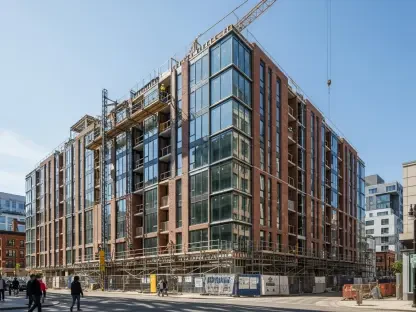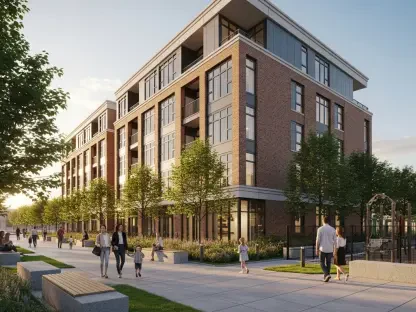

For years, the only sounds within the walls of the former Blackfriars Crown Court were echoes of past proceedings, but a new £100 million plan is set to replace that silence with the vibrant energy of a new residential community. The ambitious project, spearheaded by specialist developer IQ, will transform the disused Southwark site into a vital hub for hundreds of students and families, directly addressing London’s acute housing shortage. This redevelopment represents more than just new construction; it signifies a deliberate shift in urban planning, prioritizing homes over offices and community over commerce.
From Gavel to Gables a Landmark’s New Beginning
The plan to overhaul the former Blackfriars Crown Court site is one of the most significant redevelopment projects in Southwark, promising to breathe new life into a property that has sat dormant for years. At its core, the project is a response to a city-wide crisis. With demand for affordable and student housing far outstripping supply, the proposal to create hundreds of new residential units in such a central location is a welcome development.
This initiative is not merely about adding numbers to London’s housing stock. It is a strategic effort to build a balanced community. By combining purpose-built student accommodation with socially rented affordable homes, the development aims to create an integrated neighborhood that serves a diverse population, turning a site of judgment into a place of opportunity and new beginnings.
The History of the Blackfriars Crown Court Site
The Blackfriars Crown Court complex was a product of the post-war era, a functional but architecturally unremarkable set of buildings that served the justice system for decades. After its closure in 2019, the site became a prime candidate for redevelopment, sparking a debate about its future. The initial vision for the property was starkly different from what is now planned.
An earlier proposal, known as “Roots in the Sky,” envisioned a commercial future for the site. That plan involved retaining the 1950s structure and converting it into modern offices and retail space, crowned with an elaborate rooftop garden. However, shifting market dynamics and an ever-growing need for housing led to a fundamental reassessment of the site’s best use, paving the way for the current residential-focused plan.
The £100 Million Transformation Plan
The approved scheme is a complete reimagining of the site. It calls for the demolition of the old court buildings to make way for three new structures, designed to rise up to nine stories. This ground-up approach allows for a modern, purpose-built environment that maximizes space and livability, a stark contrast to the constraints of an adaptive reuse project.
A New Hub for Student Living
Central to the development is the creation of 600 purpose-built student rooms. These accommodations are designed with a nod to the area’s industrial heritage, featuring an architectural style inspired by local warehouse designs. This approach aims to create a living space that feels both contemporary and rooted in the character of the neighborhood, providing a high-quality environment for students studying in the capital.
Delivering Critical Affordable Housing
Alongside the student housing, a dedicated residential block will contain 71 affordable homes, all designated for social rent. The design of this building prioritizes the well-being of its residents, incorporating features such as street-facing duplexes to create a more active and engaging streetscape. Furthermore, dual-aspect layouts will ensure homes are filled with natural light, enhancing the quality of life for families.
Enhancing Community and Connectivity
Beyond providing housing, the project seeks to improve the urban fabric of the surrounding area. A key feature is the creation of a new landscaped pedestrian path that will connect Loman and Pocock Streets. This thoroughfare will open up the site to the public for the first time, improving local permeability and integrating the new development seamlessly into the existing neighborhood grid.
A Strategic Pivot from Commerce to Community
The most telling aspect of this project is its decisive pivot away from a commercial future and toward a residential one. The choice to demolish the existing structure and build anew, rather than adapt the old courthouse for offices, reflects a clear understanding of London’s most pressing needs. This move prioritizes people and homes over corporate and retail interests.
In contrast to the “Roots in the Sky” proposal, which focused on a high-end commercial experience, the current plan delivers tangible social benefits. By dedicating the entire site to student and affordable housing, the development directly tackles the housing crisis in a way a commercial project could not. This strategic shift underscores a broader trend in urban development, where social value is increasingly weighted alongside economic returns.
Project Status and Next Steps
With planning approval now secured by developer IQ, the project is officially moving forward. The path is clear for the transformation to begin, marking the end of the site’s long period of inactivity. The immediate future involves preparing the site for its new chapter.
The next major milestone will be the demolition of the existing post-war court complex. Following the site clearance, construction is slated to begin in 2026. This timeline sets the stage for a period of intensive activity that will culminate in the emergence of a new landmark for Southwark.
Reflection and Broader Impacts
The redevelopment of the Blackfriars Crown Court site is a multifaceted endeavor, representing both a significant achievement and a considerable challenge. Its approval marks a victory for housing advocates and a step forward in revitalizing a derelict piece of central London.
Reflection
The project’s greatest strength lies in its ability to convert an underutilized public asset into a solution for a pressing social problem. However, undertaking a large-scale demolition and construction project in such a dense urban environment will present logistical hurdles. Managing disruption to the local community while delivering the project on schedule will be a key test of its success.
Broader Impact
This development has implications that extend far beyond its Southwark location. It serves as a powerful case study for how other major cities can approach the redevelopment of obsolete or vacant sites. By demonstrating a viable model for prioritizing residential needs over commercial ones, the Blackfriars project could inspire similar transformations of underused urban land globally.
A Verdict on Urban Redevelopment
The approval of the Blackfriars redevelopment represented a landmark verdict on the future of urban renewal in London. It confirmed that a former courthouse, once a place of final judgments, would instead provide a place for new beginnings for hundreds of residents. The project stood as a testament to a strategic pivot toward community-focused development.
This transformation from a site of law to a site of living provided a clear answer to how the city could creatively address its housing needs. It was a forward-looking decision that promised to shape not only the Southwark skyline but also the ongoing conversation about what a modern, equitable city should be.