
Safeguarding thousands of miles of coastline requires more than just brave personnel; it demands a physical foundation capable of withstanding both geopolitical shifts and the relentless force of the ocean. The U.S. Coast Guard currently navigates a period of intense operational demand, grappling with aging shore-side facilities built for a previous century. This $586 million investment marks a critical turning point to close the widening gap between modern mission requirements and deteriorating maritime assets.
The Strategic Pivot: Strengthening Maritime Resilience in a High-Stakes Era
Industry leaders recognize that this funding is a vital component of national security rather than a simple renovation project. As global maritime competition intensifies, ensuring the Coast Guard has functional, high-capacity bases is essential for search and rescue, law enforcement, and territorial defense. The current strategy moves away from reactive repairs toward comprehensive redevelopment of the logistical backbone.
Strategic planners emphasize that infrastructure is the silent partner in maritime dominance. Without modernized piers and utility systems, even the newest fleet of cutters cannot reach its full operational potential. This investment allows the service to overhaul its assets to meet the challenges of the present decade while ensuring readiness for long-term territorial protection.
Tactical Overhaul: From Arctic Outposts to Atlantic Strongholds
Reinforcing the Final Frontier at Base Kodiak
The $315 million allocation for Alaska’s Base Kodiak addresses the unique challenges of the Pacific theater. This complex project involves removing unexploded ordnance and building a heavy-duty fuel pier designed to support next-generation cutter operations. The scope includes extensive waterfront improvements and the installation of essential cutter shore ties and utilities.
By integrating advanced utility buildings, the project tackles the “tyranny of distance” in the Arctic. However, construction in this harsh environment presents significant logistical hurdles, including narrow weather windows and specialized labor requirements. Analysts suggest this move signals a permanent shift toward mission-ready infrastructure in remote but strategically vital regions.
Expanding Homeport Capabilities at Naval Station Newport
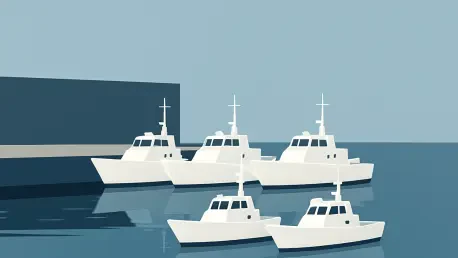
In Rhode Island, a $271 million contract focuses on the total demolition and replacement of Pier 1. This project is specifically engineered to berth four new offshore patrol cutters, expanding the service’s footprint on the East Coast. It illustrates a broader industry trend of “brownfield” redevelopment within existing military bases to optimize space.
Replacing obsolete structures with multi-functional facilities allows the Coast Guard to accommodate larger, more technologically advanced vessels. Experts note that precision scheduling is required to avoid disrupting current fleet operations during the transition. This modernization increases overall readiness while maximizing the utility of high-traffic naval stations.
The Rise of Accelerated Design-Build and Procurement Innovation
A standout feature of these contracts is the use of “accelerated design-build to budget” methods. This approach, authorized under recent defense legislation, leverages Other Transaction Authority to bypass traditional, sluggish bidding processes. It represents a disruptive shift in federal contracting that prioritizes rapid problem-solving over rigid, sequential cycles.
Contrary to the belief that federal projects must be slow, these methods prove that procurement can move at the speed of industry. By integrating design and construction phases, the government reduces the time required to deliver critical assets. This efficiency is increasingly necessary as national security demands evolve and require immediate infrastructure responses.
A Nationwide Ripple Effect in Federal Contracting
Beyond major hubs, smaller projects like the $43 million pier in Astoria indicate a comprehensive nationwide push for waterfront modernization. Spreading contracts across various firms fosters a competitive ecosystem of contractors capable of handling complex maritime engineering. This diversity strengthens the industrial base and ensures long-term availability of specialized skills.
Analysts view this spending surge as a proactive measure for infrastructure resiliency. Upgrades protect against both climate-related rising sea levels and evolving geopolitical threats. By modernizing now, the government ensures that its maritime infrastructure remains viable for the next generation of coastal operations across all territories.
Strategic Takeaways for the Maritime and Construction Sectors
The primary takeaway for stakeholders is that federal infrastructure spending is moving toward “resiliency-first” designs. Streamlined delivery models are becoming the standard to reduce the time from funding to functionality. This shift requires contractors to be more agile and collaborative than in previous contracting eras.
Contractors should invest in specialized capabilities, such as unexploded ordnance handling or rapid pier demolition, to align with specific technical needs. Mastering the nuances of design-build delivery and Other Transaction Authority is essential to remain competitive. Future solicitations will likely favor those who can navigate these expedited schedules and complex maritime environments.
Conclusion: Securing the Future of America’s Coastline
The $586 million investment functioned as a fundamental modernization of the tools needed to maintain a robust coastal presence. It provided a series of construction projects that strengthened the service’s capabilities in both the Atlantic and Pacific oceans. This funding ensured that shore-side facilities matched the sophistication of the new fleet.
As these facilities moved toward completion by 2030, the service became better equipped to deploy its newest cutters effectively. The success of these projects established a blueprint for future federal infrastructure by proving that innovative procurement effectively bridged the gap between aging assets and modern missions. Stakeholders looked toward these developments as the foundation for long-term maritime readiness and national safety.