
Faced with an unprecedented surge in student applications that has strained its on-campus living capacity to the breaking point, the University of Rhode Island has embarked on a transformative construction initiative to fundamentally reshape its residential landscape. This ambitious undertaking, a direct response to the record-setting enrollment demands seen in the Fall 2025 application cycle, involves a strategic partnership with the construction and development firm Gilbane. Together, they have broken ground on three significant housing projects across the Kingston campus, backed by a substantial $210.8 million bond issuance. The plan is not merely to add beds but to create modern, integrated living-learning communities that cater to the evolving needs of both undergraduate and graduate students. This development represents a critical component of the university’s broader 10-year strategic plan, aiming to enhance the overall student experience and support sustained institutional growth by providing the necessary infrastructure to accommodate its expanding student body.
A New Era for Undergraduate Living
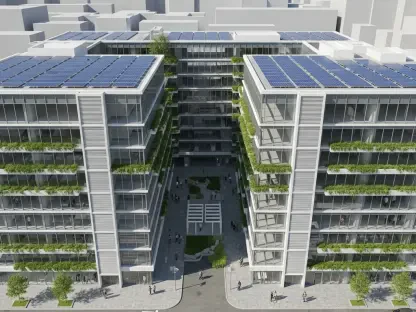
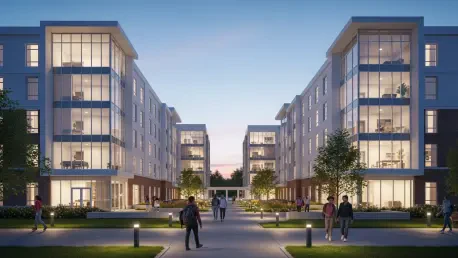
The centerpiece of this massive expansion is the construction of two state-of-the-art, apartment-style residence halls strategically located on Flagg Road, which will dramatically increase housing options for undergraduates. These two buildings are designed to introduce 914 new beds to the campus, distributed across a mix of contemporary two- and four-bedroom units that offer students more independence and privacy than traditional dormitory living. The larger of the two structures, the north residence hall, is planned to encompass 173,739 square feet and will feature 134 individual apartment units. Its counterpart, the south residence hall, will provide an additional 105 units within its 135,177-square-foot frame. This part of the project is a clear acknowledgment of the modern student’s desire for flexible living arrangements that bridge the gap between on-campus community and apartment-style autonomy, directly addressing the housing deficit while elevating the standard of living for a significant portion of the student population.
Beyond simply providing more rooms, the design of the new undergraduate halls focuses on fostering a holistic and supportive student environment through a wealth of integrated amenities. The architectural plans emphasize the creation of dynamic community hubs, incorporating expanded study lounges for academic collaboration, comfortable common areas for social interaction, and dedicated community wellness rooms designed to support student well-being. A convenient grab-and-go cafe will be included to cater to the fast-paced schedules of students, offering quick and healthy food options. The vision extends to the outdoors, where a landscaped courtyard will serve as a central gathering space, complemented by a network of walking and biking paths that will better connect the new residential quadrant to the rest of the Kingston campus. These carefully planned features are intended to cultivate a vibrant, connected, and supportive residential community that enriches the university experience far beyond the classroom walls.
Reimagining Graduate Student Accommodations
In parallel with the new undergraduate construction, the project includes a comprehensive revitalization of the Graduate Village Apartments, a dedicated complex situated on Route 138. This initiative involves a complete reconstruction of the existing facilities to create a modern and comfortable living environment specifically tailored to the needs of graduate students. The revitalized complex will comprise 152 updated apartment units spread across a total of 84,813 square feet. Recognizing the diverse needs of this student demographic, the new apartments will offer a variety of floor plans, including studio, one-, two-, and three-bedroom layouts, providing flexible options for individuals, couples, and students with families. This focused effort ensures that the university’s housing expansion is inclusive, addressing the distinct lifestyle and academic requirements of its advanced-degree candidates and enhancing its appeal as a premier destination for graduate-level studies.
The redevelopment of the Graduate Village extends beyond the individual living units to enrich the communal aspects of graduate student life. Central to the plan is the creation of an enhanced community center, which will serve as a hub for social gatherings, academic workshops, and resident support services. This new facility is envisioned as a space where graduate students from various disciplines can connect, collaborate, and build a strong sense of community outside of their demanding academic programs. Furthermore, the project includes the revival of the complex’s community garden, offering residents a unique opportunity for recreation, sustainable living, and hands-on engagement. By thoughtfully incorporating these shared amenities, the university aims to cultivate a supportive and interconnected neighborhood that significantly improves the quality of life for its graduate student population, making the campus a more welcoming and integrated place for all its scholars.
The Strategic Partnership Model
This entire campus transformation is being executed through an end-to-end public-private partnership (P3) model, a strategic approach that leverages the expertise and resources of the private sector to deliver public infrastructure projects. The Providence-based firm Gilbane, with its extensive portfolio in higher education and health sciences, is serving as both the developer and the builder, managing the project from conception through completion. This integrated role is a hallmark of the P3 model, which Gilbane has championed as a highly effective method for public institutions. In 2025 alone, the firm added over $2.3 billion in P3 projects, underscoring its deep experience in this domain. For URI, this partnership structure provides a streamlined path to achieving its ambitious housing goals while mitigating many of the financial and logistical burdens typically associated with large-scale capital projects, allowing the university to focus on its core academic mission.
The adoption of the P3 model offers several distinct advantages that make it an attractive solution for public universities like URI facing urgent infrastructure needs. A primary benefit is the ability to preserve the institution’s balance sheet, as the private partner often assumes a significant portion of the upfront financial risk and investment. This model is also renowned for its efficiency, frequently delivering projects on a more accelerated timeline and at a lower cost compared to traditional procurement methods. By bundling the design, construction, and long-term maintenance of the facilities into a single agreement, the P3 structure creates powerful incentives for the private partner to deliver a high-quality, durable product. This alignment ensures that the new housing facilities will not only be built efficiently but will also be maintained to a high standard over their entire lifecycle, guaranteeing a lasting return on investment for the university and a superior living experience for its students.
Looking Ahead at Campus Life
With the first of the new residence halls scheduled to open its doors to students in the Fall of 2027 and the full completion of all three housing structures anticipated by the Fall of 2028, the immediate impact on the student experience was projected to be profound. This carefully phased timeline ensured that the university could begin alleviating its housing pressures as quickly as possible while the more extensive reconstruction of the graduate village continued. The completion of these projects marked a significant milestone in URI’s history, representing the addition of over 2,000 new on-campus beds since 2012. This substantial increase in residential capacity not only accommodated the university’s growth but also transformed the campus into a more vibrant and residential-focused community. The successful execution of this plan provided a powerful model for other public institutions grappling with similar challenges of balancing rising enrollment with the need for modern, high-quality infrastructure.