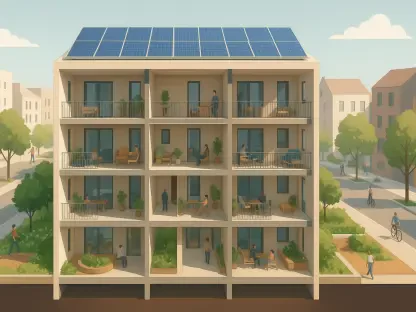

Labor shortages in the construction trade continue to act as a significant bottleneck for the large-scale housing projects incentivized by the ROAD Act. This legislative framework has fundamentally redefined the relationship between institutional investors and the American residential landscape by steering capital away from the acquisition of existing family homes. Historically, critics argued that large-scale buying of entry-level stock crowded out first-time buyers, leading to a heated public debate about the role of Wall Street in local neighborhoods. By creating a regulatory environment that rewards the creation of new supply rather than the consolidation of existing inventory, the Act successfully nudged major players toward the Build-to-Rent model. This shift is a necessary evolution in a market where the affordability gap has rendered traditional homeownership unattainable for many. As families seek the space of a house without the burden of high-interest debt, these purpose-built communities provide a critical bridge to stability.
Strategic Realignment and Emerging Market Trends
Capital: Migration Toward Ground-Up Development
Ground-up construction is now seen as the primary engine for sustainable growth within the real estate sector. The logic behind this movement is rooted in the operational efficiency of horizontal apartments, which are essentially detached single-family units managed under a single commercial umbrella. Unlike the fragmented portfolios of the early 2020s, which relied on purchasing scattered homes across various zip codes, modern Build-to-Rent projects are concentrated in unified developments. This concentration allows property managers to optimize maintenance schedules, landscaping, and community amenities, significantly reducing the overhead costs associated with geographic dispersion. Furthermore, institutional investors have discovered that developing their own assets provides a higher degree of control over the quality and longevity of the physical structures. By moving from a strategy of acquisition to one of creation, these firms are effectively becoming large-scale homebuilders, adding much-needed volume to the national supply.
Evolution: Site Selection and Yield Management
While the Sun Belt regions were the initial focus for Build-to-Rent expansion, the current trend shows a distinct shift toward secondary and tertiary markets. This migration is driven by the reality that popular hubs like Phoenix and Atlanta have seen a massive surge in supply, leading to stabilized rent growth and compressed yields for early investors. To maintain profitability, capital is now being deployed in regions where land prices remain competitive and the demand for quality housing still outpaces development pipelines. This strategy requires a sophisticated analytical approach to site selection, utilizing data modeling to identify areas with strong job growth in industries like healthcare and manufacturing. By diversifying away from oversaturated markets, developers are mitigating the risks associated with regional economic downturns. The focus has transitioned from simply finding cheap land to identifying locations where the demographic profile aligns with long-term rental stability and favorable local regulations.
Economic Headwinds and Implementation Challenges
Navigation: Construction Costs and Financial Volatility
Despite the strong legislative support, the sector faces substantial hurdles related to the volatility of construction costs and the broader financial environment. Rising prices for essential materials such as lumber, steel, and electrical components have made the underwriting process for new developments remarkably difficult. Industry participants frequently report that construction inflation represents a major threat to project timelines and overall profitability. To navigate these challenges, developers have turned to innovative procurement strategies, including early-stage bulk purchasing and the adoption of modular construction techniques. These methods aim to lock in prices and reduce the total time spent on-site, thereby minimizing the impact of fluctuating material costs. Additionally, the tightening of credit markets has necessitated a more conservative approach to leverage, with developers seeking out institutional partners who can provide stable, long-term equity to ensure project viability in high-cost climates.
Obstacles: Local Barriers and Federal Objectives
A significant disconnect remains between the federal government’s pro-supply housing goals and the ground-level reality of local permitting and zoning. Persistent NIMBY sentiments continued to pose a major challenge to the expansion of Build-to-Rent communities, as existing residents resisted the introduction of rental housing into their neighborhoods. To overcome these barriers, developers adopted a more proactive and community-centric communication strategy, emphasizing the long-term benefits of professionally managed rental stock. This included highlighting how projects contributed to local tax bases without significantly increasing the burden on local schools. Strategic partnerships with local governments to fast-track approvals became a standard practice for those seeking to maximize the federal benefits of the ROAD Act. Looking forward, industry leaders recognized that the path to solving the national housing shortage required more than just capital; it required a commitment to operational excellence.