
Luca Calaraili is a veteran of the construction industry who has spent years bridging the gap between traditional architectural design and the technical requirements of modern energy infrastructure. With a background that spans complex project delivery and a keen eye for technological innovation, he offers a unique perspective on how major contractors are evolving into multidisciplinary powerhouses. His insights come at a pivotal time as the industry shifts toward vertical integration and the rapid adoption of sophisticated energy management systems.
Large contractors are increasingly absorbing firms that specialize in solar, battery storage, and microgrid controls. How does owning these engineering capabilities change your approach to project delivery, and what are the primary challenges of integrating a specialized controls team into a traditional construction framework?
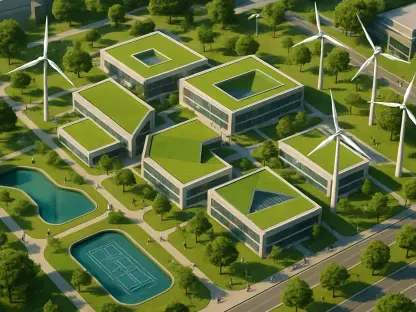
When a firm like Mortenson moves to acquire a specialist like Nor-Cal Controls, it represents a deliberate shift toward becoming a total solutions provider rather than just a builder. By bringing power control systems engineering in-house, we can eliminate the friction that usually exists between the physical construction of a site and the complex programming required to make it functional. We have already seen the scale of this need through the delivery of nearly 60 energy storage projects and hundreds of wind projects across the country. The main challenge lies in aligning the fast-paced, software-driven culture of a controls team with the rigid, safety-first scheduling of a traditional field crew. It requires a relentless focus on the customer to ensure that the expertise of the El Dorado Hills-based team translates into a seamless experience for the client on-site.
Modern energy assets require complex interfacing with the electrical grid to manage power dispatch and storage. What technical hurdles do you face when aligning these control systems with existing grid infrastructure, and how do you ensure seamless communication between the hardware and the software?
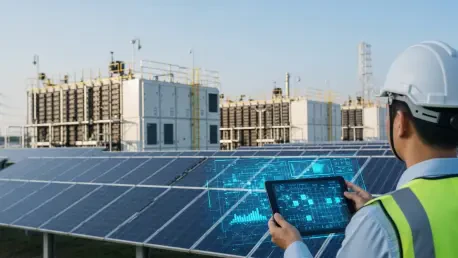
The technical hurdles often center on the intelligence required to manage how energy assets interface with an aging electrical grid that was never designed for two-way power flow. We are now designing systems that must decide in real-time when to store energy in a battery and when to dispatch it to the grid to maintain stability. This requires a sophisticated layer of software that acts as the “brain” of the microgrid, sitting right at the center of how these assets operate. Ensuring seamless communication means testing these control systems under various load conditions long before they are deployed in the field. Our goal is to create a digital handshake between the hardware and the grid that is robust enough to handle the increasing complexity of the national energy market.
The rising demand for domestic power is putting immense pressure on energy infrastructure development. How are you scaling your workforce to handle dozens of simultaneous renewable energy projects, and what specific metrics do you use to measure the efficiency of these complex installations?
Scaling up to meet this “strong opportunity” in the energy sector requires a combination of aggressive hiring and strategic acquisitions to fill specialized gaps in our workforce. We are seeing a massive demand for more power across the country, which is why we are expanding our offerings to include more than just the physical labor of construction. To measure efficiency, we look closely at project delivery timelines and the accuracy of the control system integration during the commissioning phase. We also track the long-term performance data of the hundreds of wind and solar assets we’ve already built to ensure they meet the energy needs of the nation. It is about staying grounded in our values while being deliberate about how we grow to meet these new infrastructure pressures.
Some major builders are launching internal off-site manufacturing firms for complex components to streamline shipping and logistics. How does this shift toward vertical integration affect your supply chain, and what steps should a firm take to ensure off-site quality matches on-site requirements?
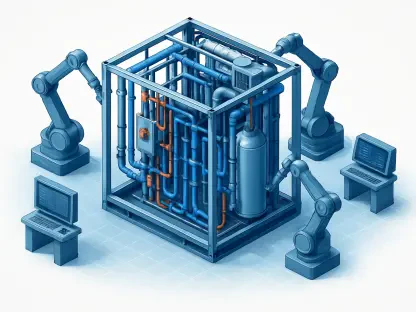
The move toward off-site manufacturing, such as the launch of Form Off-Site Solutions by JE Dunn, is a game-changer for supply chain predictability and logistics. By handling product planning, engineering, and manufacturing in a controlled environment, a firm can significantly reduce the risks associated with weather delays and site-specific labor shortages. To ensure that quality remains high, we must integrate the design and manufacturing phases so that every component is built to the exact specifications required for its final destination. This shift allows for a level of precision that is often difficult to achieve in the field, especially with complex construction components. Ultimately, the goal is to make shipping and logistics more predictable so that the delivery services on-site are as efficient as possible.
The industry is seeing a surge in AI tools for contract scanning and jobsite data collection regarding labor and payroll. How do these digital tools mitigate financial risk during a project, and what is the step-by-step process for training a traditional field team to adopt these technologies?
Digital tools like those from Rhumbix or Document Crunch are becoming essential for identifying critical risk provisions and preventing payment disputes before they escalate. By using AI to scan contracts for notification failures or specification non-compliance, we can catch administrative errors that might otherwise cost millions. The training process for a field team starts with moving away from manual paper logs and introducing user-friendly mobile interfaces for accurate jobsite data collection. We then provide real-time feedback to the foremen, showing them how this data protects their project budget and ensures everyone is paid accurately and on time. Finally, we integrate this data into our broader project management software to create a single source of truth for the entire organization.
What is your forecast for the integration of energy management and construction?
My forecast is that the line between a construction company and a technology firm will continue to blur until they are virtually indistinguishable in the energy sector. We will see more major players acquiring specialized firms because the demand for domestic power is growing at a rate that traditional building methods simply cannot satisfy. By 2025 and beyond, the most successful contractors will be those who can design, build, and operate the digital control systems that manage our nation’s power. We are moving toward a future where “delivering a project” means providing a fully autonomous energy asset that is ready to communicate with the grid the moment the last bolt is tightened. Construction is no longer just about concrete and steel; it is about the data and controls that breathe life into those structures.