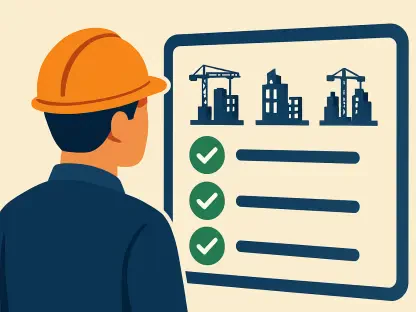

The rapid expansion of the data center market is driving massive secondary investment across the power generation and water management sectors. This surge represents a fundamental change in how global developers view physical assets, moving away from the narrow perspective of construction toward a broader infrastructure ecosystem. In 2026, the focus is no longer solely on the speed of pouring concrete, but on the intricate dance of securing high-capacity energy grids and sustainable water resources that these facilities demand. As projects become more complex, the industry has recognized that the success of a building is dictated by the systems surrounding it. This realization has forced a shift in capital allocation, where billions are now channeled into the secondary networks that support high-growth technology hubs. Consequently, the traditional boundaries between civil engineering and utility management have blurred, creating a new paradigm where the facility itself is merely one component of a strategic landscape.
The Strategic Shift: Prioritizing Pre-Construction Intelligence
The industry is placing an unprecedented premium on early-stage decision-making, recognizing that the long-term viability of any major project is established well before the first onsite activities begin. Developers have transitioned their focus toward strategic advisory services to navigate the increasingly dense web of permitting and utility coordination. In this environment, the role of the consultant has evolved from a technical designer into a critical navigator of bureaucratic and environmental hurdles. Project owners now seek partners who can provide deep insights into site selection and infrastructure alignment, ensuring that assets are positioned to maximize efficiency and minimize local impact. This proactive approach allows teams to identify potential bottlenecks in the power supply or environmental constraints that could otherwise derail a project during its middle stages. By investing heavily in the pre-design phase, firms are effectively insulating themselves against financial volatility and operational delays.
This strategic evolution has fostered a significant restructuring of how major engineering and management firms approach risk, moving away from high-liability contracts. There is a clear trend toward de-risking business models by favoring professional services over traditional at-risk construction management. Many leading firms have deliberately exited self-perform roles, choosing instead to provide value through high-margin engineering and management oversight. This shift allows these companies to avoid the volatile costs of direct labor and the asymmetric risk profiles that have historically plagued large-scale design-build contracts. By focusing on intellectual capital rather than physical labor, firms maintain greater financial stability while providing specialized expertise that clients cannot find elsewhere. The focus has shifted to managing the project lifecycle and the complex web of external dependencies that define modern development, where the value provided is the management of risk.
Global Synergy: Leveraging Talent and Policy Reform
As infrastructure projects grow in technical complexity, the challenge of workforce availability has shifted from a simple matter of headcount to a specialized requirement for niche expertise. To overcome persistent local labor shortages, leading firms have adopted global integration strategies that connect multidisciplinary teams across different regions and time zones. This approach allows specialized knowledge to be deployed wherever demand is most acute, ensuring that the right experts are available to tackle the most sophisticated engineering hurdles regardless of their physical location. By utilizing digital collaboration tools and integrated global platforms, companies can draw on talent pools in disparate markets to solve complex problems in real-time. This global synergy not only addresses the scarcity of specialized skill sets but also drives innovation by bringing diverse perspectives to local projects. The result is a more resilient and flexible delivery model that prioritizes technical excellence over proximity.
Stakeholders prioritized the integration of automated permitting systems to reduce human error and administrative lag during the delivery of critical projects. They focused on developing unified data standards that allowed for seamless information sharing between private firms and public agencies. This transition required a commitment to transparency and the adoption of collaborative platforms that tracked project milestones in real-time. Professionals moved away from siloed planning and instead adopted integrated delivery methods that included legal and policy experts from day one. By investing in these collaborative frameworks, the industry successfully reduced the time required for site approvals by nearly thirty percent. These steps demonstrated that technical innovation must be paired with institutional reform to achieve meaningful progress. Moving forward, the industry maintained this momentum by institutionalizing these reforms and ensuring that all future developments adhered to these streamlined protocols.