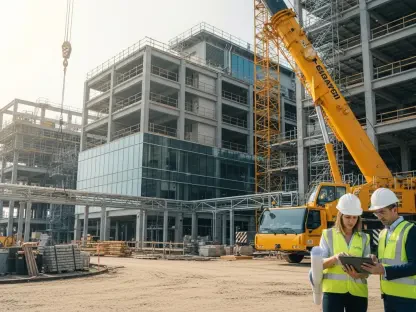

In the demanding world of New York City high-rise construction, Kerri Riggio stands as a seasoned authority with over 25 years of experience in the field. Currently serving as a senior superintendent at Suffolk, she has navigated the complexities of landmark restorations and high-stakes infrastructure, bridging the gap between historical preservation and modern engineering. Her career path is particularly unique, beginning in the classroom before she followed in her father’s footsteps to master the grit and precision of the job site.
In this conversation, we explore the intricate logistical puzzles of renovating the iconic Waldorf Astoria, the profound emotional impact of delivering affordable housing, and the evolving dynamics for women in an industry that was once a closed door.
Transitioning from a background in education to the construction field involves a significant shift in daily environment. What specific soft skills from teaching translate most effectively to the job site, and how does seeing a project’s tangible impact on a community change your long-term career goals?
The most vital skill I carried over from teaching was the ability to manage diverse personalities and foster a team dynamic where everyone works toward a singular goal. In construction, you are constantly balancing the needs of various trades and stakeholders, much like managing a classroom but with much higher physical stakes. Falling in love with this industry happened when I realized that our work creates tangible change, whether it is a bridge, a school, or a home that people will use for generations. Standing outside when it is zero degrees becomes worth it when you realize the purpose behind the labor—that someone will eventually call this structure their home. This sense of purpose shifted my goals from seeking a comfortable schedule to seeking the satisfaction of building things that add real value to the world around us.
Restoring landmark buildings requires rebuilding internal steel and masonry while leaving the historic facade untouched. When working on elevated structures like copper spires 750 feet up, what are the primary engineering hurdles, and how do you coordinate complex tasks like welding scaffolding directly into the building’s frame?
The Waldorf Astoria project was an incredible engineering challenge because we essentially had to rebuild the entire internal structure without knocking the building down or disturbing the landmarked facade. When we moved up to the pinnacles, we were working on copper spires 750 feet in the air, which required supporting the original copper while simultaneously demolishing the old walls and installing new steel, brick, stone, and windows. To facilitate this, we took the unusual step of welding the scaffolding directly into the building’s steel frame to ensure stability at that height. It was a high-pressure environment that required meticulous coordination between demolition and structural teams, and while it certainly gave me a few gray hairs, seeing those spires restored while the bottom floors were being converted into residences was a career highlight.
Building affordable housing during periods of labor shortages and material delays requires intense logistical coordination. How do you maintain progress when crews are reduced to a fraction of their normal size, and what are the unique emotional rewards of handing over keys to residents transitioning from temporary shelters?
During the height of the pandemic, we worked on an affordable housing unit in the South Bronx where the city’s restrictions meant we had to operate with only three or four people on tasks that usually required a dozen. Maintaining progress required extreme efficiency and patience, especially as we navigated long lead times for materials and a skeletal workforce. However, the logistical headaches faded away when we finally met the residents, many of whom were senior citizens or women coming from homeless shelters where they had no privacy at all. Seeing a woman realize she finally had a place of her own—and her surprise at seeing a woman in charge of the build—was incredibly powerful. It reminded me that while we build physical products, the true value lies in providing security and dignity to people in need.
Field teams now frequently feature women in diverse roles ranging from project management to onsite supervision. How does this increased representation change the way a site functions daily, and what practical measures can companies take to ensure that pay equity and professional inclusion are standard across the board?
The industry has changed immensely since my early days when construction was strictly an “all-boys club” where women weren’t even invited to the party, let alone given a seat at the table. In the past, I even dealt with the frustration of having people report to me who were making more money than I was, which is a major reason why I eventually moved on to better opportunities. Today, I work on a team that includes eight women across project management and field supervision, which creates a more inclusive and balanced environment that was once unheard of. For companies to ensure this progress continues, they must move beyond administrative diversity and place women in high-level field roles while maintaining transparent pay structures to ensure equity is a reality rather than just a talking point.
Early-career professionals often face self-doubt when entering a male-dominated trade. What specific habits help build the confidence needed to manage large teams, and how can senior leaders foster an environment where new talent feels comfortable speaking up and trusting their technical expertise during high-pressure situations?
Building confidence starts with the realization that you belong in the room and that your technical expertise is valid, regardless of the industry’s historical demographics. I tell early-career professionals to trust themselves and understand that confidence is a muscle that grows every time you tackle a new challenge or speak up in a meeting. Senior leaders play a crucial role by actively creating space for new talent to contribute and by dismantling the old-school gatekeeping that often discourages women from taking lead roles. When a leader validates a junior professional’s input during a high-pressure situation, it reinforces their determination and helps them overcome the moments of self-doubt that are natural when starting out in such a demanding field.
Do you have any advice for our readers?
My advice to anyone entering this field is to be confident and trust your instincts from day one. It is completely normal to feel a sense of self-doubt when you are working in an environment that hasn’t always looked like you, but you must never let that internal voice hold you back from pursuing leadership. Believe in your abilities, use your voice, and know that you possess the capability and the determination required to succeed at the highest levels. Every challenge you face is simply another building block in your professional foundation, and as you overcome them, your confidence will naturally follow.