
In a significant step toward urban decarbonization, Cardiff has activated a groundbreaking £15.5 million infrastructure project designed to repurpose industrial byproducts into a sustainable energy source for its citizens. The operational launch of the city’s new low-carbon Heat Network marks a pivotal moment in its “One Planet Cardiff” strategy, an ambitious plan to achieve carbon neutrality. This initiative is not merely a theoretical exercise in green engineering; it is a tangible system already providing warmth to homes and institutions by capturing surplus heat that would otherwise be vented into the atmosphere. The project represents a fundamental shift in how a modern city can manage its energy needs, transforming a liability—waste heat—into a valuable community asset. By creating a closed-loop energy system, Cardiff is establishing a powerful model for how metropolitan areas can innovate to meet stringent climate goals while delivering direct benefits to residents.
A Landmark Connection in Urban Sustainability
Pioneering Residential Integration
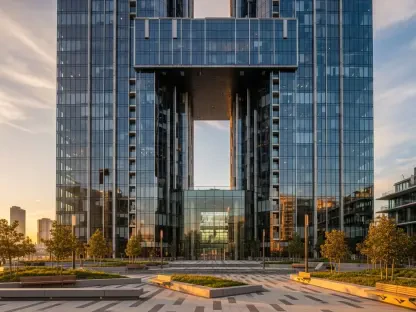
The practical and human-centered impact of this ambitious network became fully apparent with the connection of its first residential building, Scott Harbour. This former office block in Cardiff Bay, now thoughtfully redeveloped into 78 council-owned apartments, serves as the flagship example of the project’s real-world application. For the residents of these homes, the abstract concept of a district heat network translates into reliable hot water and space heating without the need for individual gas boilers. This milestone is crucial, as it moves the project from an industrial-scale concept to a direct benefit for the community. Each building integrated into the network, including Scott Harbour, is projected to achieve an extraordinary 80% reduction in carbon emissions associated with heating. This single connection effectively showcases the system’s potential to dramatically lower the carbon footprint of the city’s housing stock, providing a scalable and effective alternative to fossil fuel dependency for urban residential developments.
Expanding the Network’s Reach
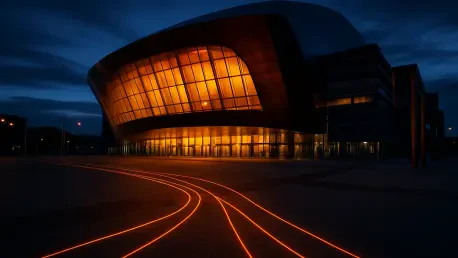
While the connection of Scott Harbour represents a key milestone for residential integration, the network’s reach already extends into the institutional heart of the city, demonstrating its versatility and scale. The very first building to join the system was Cardiff & Vale College, setting a precedent for public and private sector participation. The momentum is set to continue with several of Cardiff’s most prominent landmarks scheduled for connection in the near future. These include the Senedd, home of the Welsh Parliament, and the iconic Wales Millennium Centre, which will soon draw their heating from this recycled energy source. This expansion is made possible by a 4.9-kilometer network of highly insulated underground pipes that efficiently transport the captured thermal energy across Cardiff Bay. The inclusion of such high-profile institutions not only validates the technology but also solidifies the heat network as a cornerstone of the city’s comprehensive climate action strategy, showcasing a united front in the transition toward a sustainable future.
The Engineering and Economics of Recycled Energy
The Technology Behind the Heat
At the core of this innovative system is a sophisticated process of energy recycling that begins at Viridor’s Trident Park Energy Recovery Facility. During the facility’s primary function of generating electricity, a significant amount of surplus heat is produced as a byproduct. In a conventional setup, this thermal energy would be considered waste and dissipated into the environment. However, Cardiff’s network captures this heat and channels it into the insulated pipeline system. From there, it is distributed to connected buildings to provide all their necessary space heating and hot water. This elegant solution turns an environmental inefficiency into a valuable resource. Furthermore, the system was designed with long-term adaptability in mind. It is “heat-source neutral,” meaning that as technology evolves, the network can be adapted to incorporate other green energy sources, such as geothermal heat, without requiring a complete overhaul of the core infrastructure, ensuring its relevance and sustainability for decades to come.
A Blueprint for Future Urban Development
The successful implementation of the heat network was a testament to strategic collaboration and forward-thinking investment. This project, which was financed through a partnership between the UK and Welsh governments, not only advanced the city’s environmental objectives but also provided tangible economic benefits. Throughout its four-year construction phase, the project supported approximately 30 local jobs, contributing directly to the regional economy. Once fully operational, its environmental impact was projected to be immense, with an estimated annual savings of around 10,000 tonnes of carbon dioxide equivalent. This reduction was comparable to taking 3,700 homes with conventional gas boilers completely off the grid. The success of this initial phase was so pronounced that the local authority had already begun planning a potential second phase. This future expansion aimed to extend the low-carbon heating network into the bustling city center, proving that the Cardiff Heat Network was not an isolated project but the foundational step in a long-term vision for a truly sustainable urban landscape.