
As an unprecedented wave of home renovation projects looms for 2026, with industry forecasts predicting that half of all American homeowners will initiate upgrades, the construction sector stands at a pivotal juncture. This impending “remodeling renaissance” presents both immense opportunity and significant challenges, demanding a new breed of general contractor equipped to handle heightened expectations for transparency, efficiency, and quality. In this dynamic landscape, California-based Atlas General Construction (Atlas GC) emerges as a case study in strategic preparation, having meticulously engineered a business model that directly addresses the complex needs of the modern homeowner. By integrating advanced technology, fostering deep collaborative partnerships, and committing to sustainable innovation, the firm has positioned itself not merely to survive the surge but to lead it, setting a new standard for client satisfaction in a rapidly transforming industry.
The Economic and Social Drivers of a New Era in Home Renovation
The powerful surge in demand for home remodeling is not a singular phenomenon but rather the result of a perfect storm of converging economic and societal shifts. A primary catalyst is the substantial growth in home equity across the nation, which has provided homeowners with the financial leverage to undertake ambitious improvement projects that were previously out of reach. This newfound capital is being deployed in a market where the very definition of “home” has been fundamentally altered. The widespread adoption of remote and hybrid work models has transformed residential spaces into multifunctional environments for professional, educational, and recreational activities. This has ignited a widespread desire for renovations that enhance functionality, create dedicated workspaces, and improve overall comfort to support a more home-centric lifestyle. This alignment of financial capacity and functional necessity is creating one of the most robust periods of demand for residential construction in recent history.
Beyond these immediate economic triggers, deeper demographic and infrastructural trends are fueling the renovation boom, particularly in states like California. The nation’s housing stock is aging, necessitating significant upgrades to meet contemporary energy efficiency standards and modern design preferences. This need is amplified by a growing public consciousness around high utility costs, which is driving demand for sustainable features and energy-efficient systems designed to deliver long-term savings. Concurrently, an increasing number of families are adopting multigenerational living arrangements, creating a specific need for projects such as Accessory Dwelling Units (ADUs) and expanded living quarters to comfortably accommodate multiple generations. In California, these factors are magnified by a projected 6.5% growth in the construction sector, further stimulated by a massive $53.9 billion infusion from the federal Infrastructure Investment and Jobs Act, which is expected to have a significant ripple effect across the residential market.
A Blueprint for Success Founded on Vision and Strategic Evolution
Atlas General Construction was established in 2016 by founder Bill Ilter with a clear mission: to remedy a persistent and frustrating gap in the construction market. Ilter identified that the traditional, siloed approach—where designers, architects, and builders operate independently—frequently led to communication breakdowns, budget overruns, and compromised final results. His vision was to create a firm built on a foundation of radical transparency and genuine collaboration, ensuring that all stakeholders worked in unison from concept to completion. This client-centric philosophy aimed to transform the often-stressful renovation process into a seamless, predictable, and ultimately more satisfying experience for the homeowner. By breaking down operational barriers and fostering an environment of shared goals, Atlas GC was designed from its inception to deliver a higher standard of service and execution in an industry ripe for disruption.
The company’s trajectory since its founding reflects a deliberate and strategic evolution aimed at continuously enhancing its value proposition. A pivotal moment occurred in 2018 with the transition to a comprehensive design-build model, a move that integrated services and demonstrably improved project timelines by an estimated 25-30%. The following year, Atlas GC diversified its portfolio by taking on complex commercial projects for major clients like Chase Bank and Turkish Airlines, a strategic expansion that sharpened its project management capabilities and operational discipline. A significant technological leap was made in 2021 with the implementation of the ClickUp and Ressio platforms, giving clients an unprecedented level of real-time insight into their projects. This was reinforced in 2022 by the formalization of strategic partnerships with premier design firms. The firm’s geographic footprint expanded into Los Angeles and Pacific Palisades in 2024, and by 2025, its focus had sharpened on integrating advanced sustainable building practices, such as the use of Insulated Concrete Form (ICF) framing.
The Core Pillars of a Modern Construction Firm
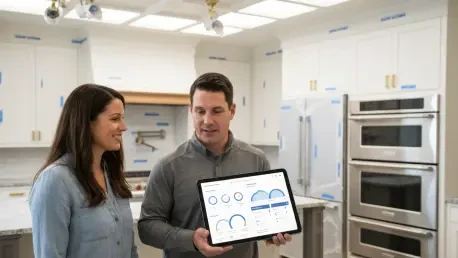
The company’s competitive edge is built upon a sophisticated and integrated approach that leverages technology to create an unparalleled client experience. In an industry often resistant to digital transformation, Atlas GC has fully embraced platforms like ClickUp and Ressio to replace the opacity of traditional construction methods with complete transparency. Instead of relying on periodic and often incomplete phone updates, clients are given access to a real-time digital dashboard that tracks every aspect of their project. Opaque financial summaries are replaced with live, itemized budget tracking, eliminating surprises and fostering trust. The static, unreliable timelines common in the industry give way to dynamic scheduling that intelligently accounts for dependencies and provides accurate forecasts. This technology-driven model, which enables seamless digital collaboration between all parties, has been shown to deliver projects 15-20% faster than their traditionally managed counterparts.
This technological foundation is reinforced by a robust ecosystem of strategic partnerships and a deep commitment to sustainability. Atlas GC maintains formal collaborations with leading design entities, including ID2 Concepts, MONO Interior Design, and Que-Architecture, ensuring that aesthetic vision and structural execution are perfectly synchronized from a project’s inception. This model directly addresses a primary source of homeowner frustration: the miscommunication that arises between separate design and construction teams. Furthermore, the company has made environmental responsibility a central focus by investing in sustainable materials and energy-efficient technologies. A particular area of expertise is the use of Insulated Concrete Form (ICF) framing systems, which drastically improve a building’s thermal performance and reduce long-term energy consumption. This focus aligns perfectly with the growing demand among California homeowners for green building features, which not only lower utility bills by up to 40% but can also increase a property’s value by 10-15%.
Building for Resilience in a Demanding Market
The company’s 2024 expansion into the highly competitive Southern California markets of Los Angeles and Pacific Palisades represents a strategic and timely maneuver to establish itself as a statewide leader. This move was calculated to address specific regional needs, including complex post-fire rebuilding projects that demand a high degree of technical expertise and sensitive design integration. Atlas GC’s extensive experience with large-scale commercial projects serves as a key differentiator in this arena. The sophisticated project management, logistical coordination, and stringent quality control protocols honed in the commercial sector translate directly into superior outcomes for complex, high-stakes residential builds. This demonstrated capability allows the firm to confidently manage multifaceted projects that smaller, less experienced contractors might struggle with, positioning it as a premier partner for discerning clients in one of the nation’s most demanding markets.
While the entire construction industry grapples with significant headwinds, including persistent labor shortages and elevated material costs, Atlas GC is uniquely positioned to navigate these challenges. Its nearly decade-long history has enabled the cultivation of a resilient supply chain and a reliable network of highly skilled tradespeople—critical assets that newer companies cannot easily replicate. This established network provides a buffer against market volatility and ensures a consistent standard of quality craftsmanship. Moreover, the firm’s efficient, technology-driven project management systems provide an additional layer of defense by minimizing material waste and mitigating the risk of costly delays. By optimizing every phase of the construction process, from procurement to scheduling, Atlas GC can maintain project momentum and budget integrity even in an unpredictable economic environment, offering its clients a level of stability and assurance that is increasingly rare.
A New Standard for the Homeowner Partnership
In the end, the success of Atlas GC’s approach was confirmed not just by its growth but by its ability to transform the fundamental relationship between a homeowner and their builder. The company’s entire business model—built upon a foundation of technological transparency, integrated design partnerships, and a forward-thinking commitment to sustainability—proved to be the definitive solution to the modern homeowner’s most pressing concerns. For the vast number of families who planned their 2026 renovations, the choice of a construction partner became a critical decision, and research showed that their ultimate satisfaction correlated most strongly with the quality of communication and transparency, not merely the lowest bid. It was in this context that the firm’s proven track record and client-centric philosophy established a new industry benchmark, positioning it as the premier partner for the transformative era of residential construction that had arrived.