
A monumental investment poised to redefine the state’s economic identity is taking shape in Little Rock, as Connecticut-based developer AVAIO Digital unveils plans for a data center campus with a potential price tag of $21 billion. This landmark project, initiated with a $6 billion first phase, already represents the single largest economic development deal in the history of Arkansas, signaling a dramatic shift in the region’s technological and industrial landscape. The sheer scale of the undertaking on the sprawling 760-acre site underscores a growing national demand for robust digital infrastructure capable of supporting the next wave of technological innovation. For Arkansas, this venture is more than just a massive construction project; it is a strategic victory born from a confluence of natural resources, forward-thinking policy, and a targeted effort to attract the titans of the digital age, promising to create a new economic engine for decades to come.
The Strategic Partnership Behind the Project
A Convergence of Infrastructure and Policy
The decision by AVAIO Digital to select Arkansas was not a matter of chance but a calculated move based on a precise set of infrastructural prerequisites essential for a facility of this magnitude. At the heart of the selection process was the site’s exceptional access to robust energy resources. The location in Little Rock offered strong power interconnection capabilities, a non-negotiable for a data hub projected to consume up to one gigawatt of electricity upon full build-out. Furthermore, the availability of substantial onsite natural gas provided a critical layer of energy security and operational flexibility. In an industry where uptime and reliability are paramount, these foundational elements provided a low-risk, high-potential environment. AVAIO’s due diligence identified the Arkansas site as a rare nexus where immense power capacity could be paired with the land and resources needed to scale operations efficiently, making it a superior choice over other potential locations across the country. This highlights a key trend where data center developers prioritize locations with pre-existing, resilient energy grids.
Complementing the state’s natural and infrastructural advantages was a deliberate and aggressive legislative push designed to make Arkansas an irresistible destination for technology investment. Governor Sarah Huckabee Sanders highlighted that the state government recently enacted new laws with the specific goal of attracting major projects like the AVAIO data hub. This pro-business legislative package was multifaceted, directly addressing common pain points for large-scale developers. A key component of this new legal framework was a measure that slashed the regulatory timeline for new energy projects by more than half, significantly accelerating the path from proposal to operation. Additionally, the state introduced a new suite of powerful incentives tailored specifically for the data center industry. This two-pronged approach of reducing bureaucratic friction while offering compelling financial benefits created a highly competitive, pro-growth environment that signaled to the tech world that Arkansas was not just open for business but was actively engineering its policies to support their needs.
Detailing the Monumental Investment
The financial and operational scope of the AVAIO Digital campus is staggering, setting a new benchmark for economic development in the region. The project’s initial phase carries a commitment of $6 billion, a figure that on its own dwarfs any previous investment in Arkansas. This first stage is merely a stepping stone toward a potential total build-out valued at an extraordinary $21 billion. Central to this investment is the massive power infrastructure required. At its final capacity, the facility is designed to support a power demand of up to 1 gigawatt (GW), an amount of energy comparable to that consumed by a large city. To begin this colossal undertaking, AVAIO has already secured an initial contract with the local utility, Entergy Arkansas, for 150 megawatts (MW) of power. This initial agreement provides the necessary energy to launch the first phase of construction and operations, establishing a foundational power supply that will be incrementally expanded as the campus grows toward its full, gigawatt-scale potential over the coming years.
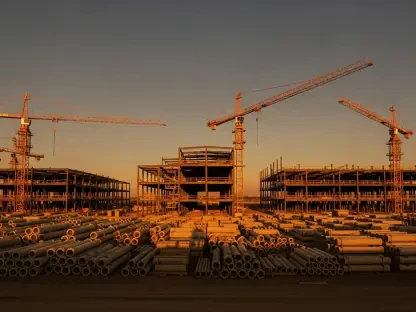
The project’s development timeline is ambitious, reflecting the urgent demand for new data capacity in the digital economy. Construction on the first phase of the Little Rock campus is officially scheduled to commence in the first quarter of 2026. Developers have set a target completion date of June 2027 for this initial stage, an aggressive but achievable goal that aims to bring the first data halls online swiftly. This rapid deployment schedule is crucial for capturing market demand and establishing the campus as a key node in the nation’s digital infrastructure network. The AVAIO project in Arkansas is not an isolated event but rather a prominent example of a broader national trend. Across the country, massive investments are pouring into the construction of hyperscale data centers needed to power everything from cloud computing and artificial intelligence to the ever-expanding Internet of Things. This project firmly places Arkansas at the epicenter of this critical infrastructure boom.
Engineering a Sustainable Digital Future
Blueprint for an Eco-Conscious Campus
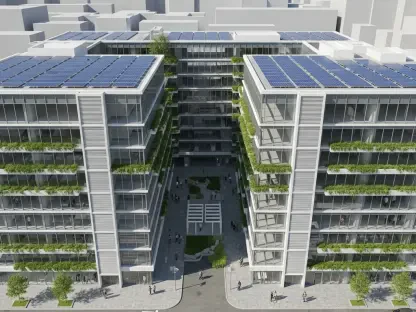
Recognizing the significant environmental footprint associated with large-scale data processing, AVAIO Digital has integrated a comprehensive suite of sustainable technologies into the campus design. The facility’s plan moves beyond traditional construction to address the industry’s high consumption of natural resources, particularly water and energy. A core feature of the design is the implementation of highly water-efficient cooling technologies, which are critical for mitigating the strain on local water supplies. This is complemented by an extensive rainwater recapture system designed to collect and store precipitation for use in the cooling processes, further reducing the reliance on municipal water sources. In addition to water conservation, the campus will harness renewable energy directly on-site. Plans include the installation of rooftop solar generation arrays across the facility’s buildings, which will contribute clean energy to its operations and reduce its dependence on the traditional power grid, showcasing a commitment to a more environmentally responsible operational model.
The commitment to sustainability extends deep into the technical engineering of the facility’s core systems, particularly its power and cooling infrastructure. The design incorporates advanced cooling-system economization, a sophisticated approach that leverages favorable ambient weather conditions to cool the data halls without relying solely on energy-intensive mechanical chillers. By using outside air when temperatures are suitable, this system can dramatically reduce the overall power demand of the campus, leading to significant energy savings and a lower carbon footprint. This intelligent cooling strategy is a key element in managing the facility’s Power Usage Effectiveness (PUE), a critical metric for data center efficiency. By prioritizing these advanced, eco-conscious engineering solutions, the project not only aligns with a growing consensus on corporate environmental responsibility within the tech sector but also sets a new standard for how hyperscale facilities can be designed to be both powerful and sustainable.
A New Economic Horizon for Arkansas
The successful courtship of this historic investment was not the result of a single action but the culmination of a deliberate, multi-pronged strategy that transformed Arkansas into a premier destination for digital infrastructure. The state’s proactive legislative reforms, which streamlined energy regulations and created targeted financial incentives, effectively rolled out the welcome mat for the technology sector. This forward-looking governance, combined with the region’s inherent advantages in energy resources and available land, created an unparalleled value proposition that a discerning developer like AVAIO Digital could not overlook. The project stood as a testament to the power of public-private synergy, where government vision enabled corporate ambition. This strategic alignment ultimately positioned Arkansas to secure a transformational project that promised to anchor its economy in the digital age, catalyzing a new era of technological growth and opportunity for the entire region.