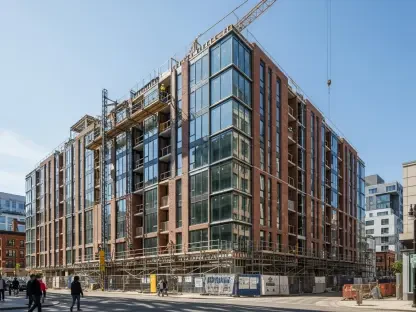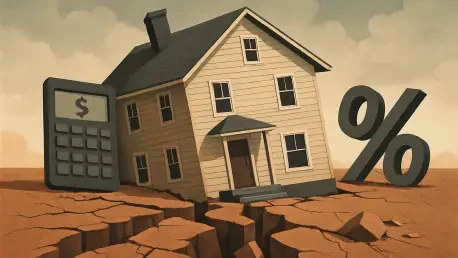

The American home building industry, which began the year with robust optimism and accelerated construction schedules, has encountered an abrupt and significant downturn as the crucial spring selling season revealed a stark absence of buyer demand. This unexpected shift has left builders contending with a costly surplus of unsold inventory and a clouded outlook, transforming a promising start into a period of deep uncertainty. The primary culprit behind this reversal is a challenging economic environment where high financing costs have pushed homeownership beyond the financial reach of many prospective buyers, effectively halting the market’s momentum and forcing a widespread reevaluation of new construction projects across the nation. Recent data from the Census Bureau underscores the severity of the situation, indicating double-digit declines in building permits and a precipitous drop in housing starts as the industry grapples with the new market realities.
A Two-Pronged Crisis of Demand and Supply
The most significant headwind battering the housing sector is the suppression of buyer demand, driven almost entirely by elevated mortgage rates that have severely eroded affordability. For a vast segment of the population, the dream of homeownership has been deferred as the monthly costs associated with a new mortgage became untenable, pushing them to the sidelines. This cooling of demand was most acutely felt during the spring, a period that typically sees a surge in market activity. Instead, builders who had ramped up construction in anticipation of strong sales were met with empty showrooms and a growing inventory of completed but unsold homes. This surplus has created a powerful disincentive for initiating new projects, as the financial risk of carrying unsold properties outweighs the potential rewards of new construction. The cycle feeds itself: as builders pull back, the supply of new homes tightens, yet without a significant improvement in affordability, the existing inventory remains a persistent drag on the market’s recovery.
Simultaneously, the industry is struggling with intense supply-side pressures that have inflated construction costs to unsustainable levels, further complicating any potential recovery. A major contributing factor has been the implementation of tariffs on essential imported building materials, including softwood lumber, copper, steel, and aluminum. These policies have directly increased the fundamental cost of constructing a home and outfitting it with necessary appliances. Compounding this issue is a severe and worsening labor shortage, which has been exacerbated by a crackdown on immigration. The construction workforce has long relied on skilled immigrant labor for critical trades such as roofing and drywall installation. With this vital labor pool shrinking, builders face not only higher wage costs due to a lack of available workers but also significant project delays. This combination of expensive materials and scarce labor ensures that even if demand were to rebound, delivering homes at price points that the average buyer can afford remains a monumental challenge for the industry.
Charting a Cautious Path Forward
The industry’s difficult year was ultimately defined by the convergence of insurmountable costs and suppressed demand, a combination that proved too formidable for the optimism that had characterized the start of 2025. The core challenge revolved around a fundamental misalignment between what builders had to charge to remain profitable and what potential buyers could realistically afford, a gap widened by persistent inflation and high interest rates. While the underlying desire for homeownership remained strong, the economic mechanisms to facilitate it were severely strained. The Federal Reserve’s anticipated rate cuts offered a glimmer of hope, yet the scope of this relief was limited by ongoing inflationary pressures. The year concluded with the housing market in a state of fragile equilibrium, where the path to a healthier, more active market in 2026 depended entirely on achieving a delicate balance between financing costs, construction expenses, and the purchasing power of the American consumer.