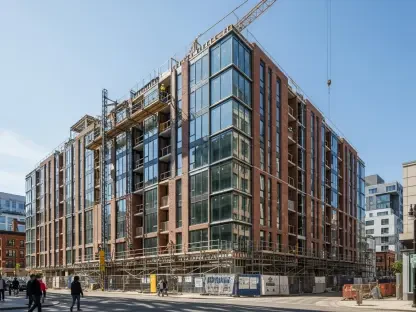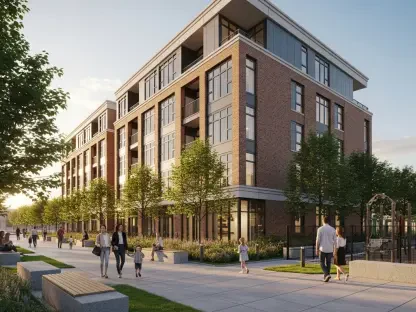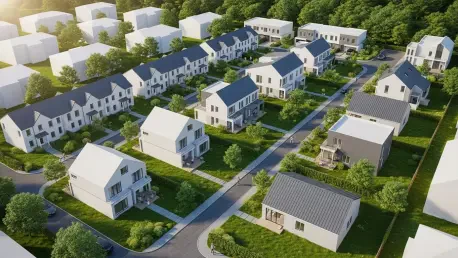

The current landscape of the Illinois housing market is defined by a staggering deficit of approximately 142,000 residential units, a shortage that has fundamentally altered the economic reality for millions of residents across the state. This scarcity is not merely a statistical anomaly but a systemic failure that has seen home prices surge by 37 percent over the last five years while active listings plummeted by 64 percent. To counter this deepening crisis, Governor JB Pritzker has unveiled the Building Up Illinois Developments (BUILD) initiative, a comprehensive legislative framework designed to dismantle the regulatory barriers that have long stifled residential growth. By shifting away from a fragmented system of hyper-local control toward a unified statewide strategy, the administration aims to jumpstart construction and restore affordability. The initiative recognizes that the state must produce 45,000 new units annually to stabilize the market—a figure that is more than double the current production rate of 19,000 units. This bold move signals a transition from temporary financial relief measures toward a long-term, structural overhaul of how land is utilized and how homes are built throughout the region.
Redefining Neighborhoods: The Middle Housing Strategy
The centerpiece of the BUILD initiative involves a sophisticated tiered zoning framework specifically engineered to promote the development of what urban planners call missing middle housing. This category encompasses residential structures such as duplexes, townhomes, and courtyard apartments that provide higher density than single-family homes but remain smaller than massive high-rise complexes. Under the proposed guidelines, the state would establish “by right” development standards based on lot size, effectively bypassing the often-contentious local zoning board hearings that frequently delay or kill projects. For instance, a property between 2,500 and 5,000 square feet would automatically qualify for up to four units, while larger lots exceeding 7,500 square feet could accommodate up to eight. This predictability is intended to attract developers who have previously avoided Illinois due to the financial risks associated with uncertain approval timelines and inconsistent local regulations. By standardizing these rules, the state provides a clear roadmap for investment that prioritizes density in existing residential corridors.
Beyond merely increasing unit counts, this strategy seeks to dismantle exclusionary zoning practices that have historically used large minimum lot requirements to prevent diverse housing options. The BUILD plan explicitly prohibits municipalities from mandating minimum lot sizes larger than 2,500 square feet for detached single-family homes, a move that maximizes land efficiency in high-demand areas. This shift is crucial for creating a broader spectrum of price points, allowing younger families and middle-income workers to find homes in neighborhoods that were previously restricted to luxury estates. Moreover, the initiative eliminates mandatory parking minimums for middle housing and affordable developments, recognizing that excessive parking requirements often inflate construction costs and occupy land that could otherwise be used for living space. By focusing on these structural adjustments, the state is attempting to create a more inclusive urban and suburban fabric that reflects the modern needs of a mobile and diverse workforce rather than sticking to outdated mid-century planning models.
Expanding Options: Accessory Units and Modern Infrastructure
Legalizing Accessory Dwelling Units (ADUs) on a statewide scale serves as a secondary but equally vital pillar of the reform, offering a flexible solution to density. Often referred to as granny flats or backyard cottages, these secondary residences allow homeowners to maximize their existing property by adding small, self-contained living spaces. While cities like Chicago have recently moved to relax their own restrictions on these structures, the BUILD initiative would ensure that every resident in Illinois has the legal right to build an ADU regardless of local municipal bans. This policy provides a dual benefit: it creates an immediate source of relatively affordable rental housing for students and seniors while offering homeowners a way to generate supplemental income to offset rising property taxes. By utilizing existing infrastructure and neighborhoods, ADUs represent a low-impact method of increasing housing supply without requiring the massive capital outlays associated with new large-scale subdivisions or high-density apartment towers.
To support this surge in development, the Pritzker administration is proposing a strategic $250 million investment package funded through infrastructure-related revenue streams. This financial commitment is divided to address the specific pain points that often derail residential projects before they can break ground. One hundred million dollars is earmarked for site preparation, covering the “below-ground” costs of sewers, stormwater management, and utility connections that are frequently too expensive for smaller developers to shoulder. Another $100 million will be managed by the Illinois Housing Development Authority to specifically incentivize the construction of middle housing units, while $50 million is dedicated to homeownership assistance programs. These funds are designed to bridge the gap between high construction costs and the actual purchasing power of first-time buyers. By combining these targeted capital allocations with regulatory deregulation, the state is attempting to create a self-sustaining ecosystem where building “missing middle” homes is both a profitable venture for developers and a realistic goal for residents.
Streamlining Growth: Bureaucracy and Political Realities
The administration identifies administrative delays as a significant hidden cost that artificially inflates the final price of housing for the end consumer. To mitigate this, the BUILD initiative introduces rigorous statewide timelines for permit reviews and inspections, ensuring that local governments cannot use bureaucratic foot-dragging as a de facto tool for blocking new construction. A particularly innovative provision within the proposal is the “third-party fail-safe,” which allows developers to hire qualified independent firms to complete necessary inspections if a municipality fails to meet the state-mandated deadline. This mechanism introduces a level of accountability that has been largely absent from the development process, forcing local agencies to modernize their operations or risk losing oversight. Additionally, the plan seeks to standardize impact fees across the state to prevent municipalities from using exorbitant charges as a deterrent for new residential projects. These administrative reforms are aimed at reducing the “regulatory tax” that currently adds thousands of dollars to the cost of every new home built in the state.
Despite the clear economic incentives, the proposal faces a complex political path due to the sensitive issue of state preemption over local home-rule authority. Local officials and township boards often argue that they are best positioned to understand the unique character and infrastructure limitations of their own communities, and they view statewide zoning mandates as an overreach. However, the Pritzker administration argues that the housing crisis is a regional and systemic problem that transcends municipal boundaries and cannot be solved through a fragmented, town-by-town approach. The success of the BUILD initiative will likely depend on the state’s ability to negotiate with these local entities while maintaining the core principles of density and uniformity. As the debate moves through the General Assembly, the focus will remain on whether Illinois can successfully pivot toward a growth-oriented housing policy that prioritizes the needs of the broader population over the desire for local exclusivity. The final outcome of this legislation will set a precedent for how the state manages its urban and suburban development for the remainder of the decade.
Strategic Implementation: Looking Toward Market Stability
Moving forward, the primary focus for stakeholders must be the rapid integration of these statewide standards into local planning departments to ensure that the transition does not create a new layer of confusion. Municipalities should begin auditing their existing zoning maps and infrastructure capacity now to identify the most suitable corridors for “by right” middle housing development before the new state mandates take full effect. Proactive engagement between local planners and state agencies will be essential to ensure that the $100 million in site preparation grants is distributed efficiently to projects that can break ground immediately. Developers, on the other hand, should prepare to adjust their business models toward smaller-scale, multi-unit projects that were previously hindered by local restrictions. This shift requires a reevaluation of architectural designs and construction methods to capitalize on the new allowances for fourplexes and sixplexes, which offer a different risk profile than traditional single-family subdivisions or massive multi-family complexes.
Furthermore, the long-term success of the BUILD initiative will require a sustained commitment to monitoring market data and adjusting financial incentives as economic conditions evolve. The state should establish a transparent reporting system to track how many “middle housing” units are actually being permitted and built compared to the 45,000-unit annual goal. If production continues to lag, additional policy adjustments—such as further reducing minimum lot sizes or expanding the “fail-safe” inspection rights—may be necessary to maintain momentum. Additionally, the $50 million dedicated to homeownership assistance should be leveraged with private lending institutions to create innovative mortgage products tailored for those purchasing units in new multi-family structures. By treating housing as a vital component of state infrastructure rather than a localized luxury, Illinois can move toward a future where supply naturally meets demand. The ultimate objective is to create a resilient and flexible housing market that can withstand economic fluctuations while providing every resident with a viable path to a stable and affordable home.