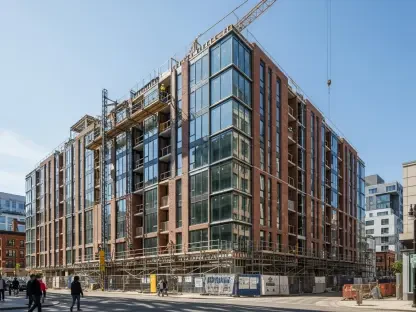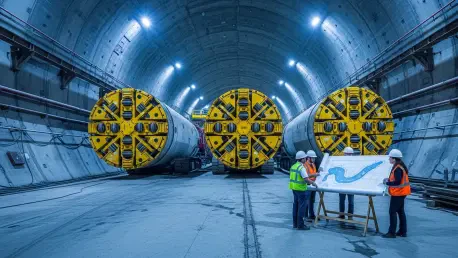

The future of the American Northeast Corridor currently hangs by a thread as the most significant rail expansion in a century faces a paralyzing financial stalemate. While the Hudson Tunnel Project was designed to be the definitive solution to a century of infrastructure decay, it has transitioned from a groundbreaking engineering feat into a cautionary tale of bureaucratic friction. As of early 2026, the Gateway Development Commission (GDC) finds itself locked in a high-stakes confrontation with the U.S. Department of Transportation (DOT), an impasse that threatens to derail a decade of planning. This situation highlights a profound instability within the regional transit landscape, where the promise of modernized travel is being eclipsed by a contentious legal battle over federal funding commitments and administrative oversight.
The Long Road to the Gateway Program
Modernizing the transit link between New Jersey and New York City has been an urgent priority since the existing North River Tunnels were first compromised by age and natural disasters. Following the collapse of previous attempts at expansion, the Gateway Program was established as the essential lifeline for a region that generates a massive portion of the national GDP. Historically, these efforts have relied on a delicate balance of state cooperation and federal reliability. However, the current environment has been upended by a sudden pivot in federal priorities. In late 2025, the executive branch initiated a sweeping administrative review that effectively froze the flow of capital, fundamentally altering the project’s momentum and forcing stakeholders to confront a reality where signed agreements no longer guarantee financial security.
Navigating the Financial and Legal Labyrinth
The “Clawback” Threat and Federal Volatility
The most immediate hurdle facing the commission is the specter of a federal “clawback,” a maneuver that has introduced unprecedented risk into the project’s ledger. Although a federal court recently mandated that the DOT disburse over $205 million to cover immediate costs, the department has notably refused to promise that it will not seek to reclaim these funds if its legal appeals are eventually successful. This lack of finality has triggered a chilling effect across the entire GDC leadership. Without the assurance that disbursed funds are permanent, the commission is trapped in a paradox: spending the money risks creating a massive future liability, while withholding it ensures that the project remains in a state of expensive dormancy.
Operational Stagnation and Contractual Deferment
This financial volatility has translated directly into a state of operational paralysis that ripples through the construction supply chain. The GDC has been forced to indefinitely defer the awarding of two monumental construction packages, including the critical contract for the actual boring of the Hudson River tunnels. Legally, the agency cannot enter into multi-billion-dollar obligations without a verified and untouchable source of capital. Consequently, the project has slowed to a crawl, with professional service contractors being instructed to limit their scope of work. This “litigation-driven construction” model means that instead of engineering progress, the project’s resources are being diverted toward managing delays and navigating the complexities of the courtroom.
The Economic Burden of Administrative Pauses
The fiscal reality of this stalemate is that a pause is never truly free; it is an active drain on limited resources. During recent work suspensions, the GDC has been forced to absorb millions of dollars in “sunk costs” that provide no long-term value to the tunnel’s completion. These expenditures include essential site security, the maintenance of idle specialized equipment, and the administrative overhead required to keep the project in a “warm” status. These costs underscore a harsh lesson in infrastructure management: political and administrative delays are not fiscally neutral events. Every day the dispute lingers, the total budget is depleted by the logistics of the shutdown itself, potentially inflating the final price tag beyond initial projections.
The Future of Interstate Infrastructure Governance
The ongoing legal struggle before the Second Circuit Court of Appeals is evolving into a bellwether for how large-scale American projects will be governed in the coming years. There is an emerging trend toward a model where federal funding is no longer a static commitment but a variable tied to evolving social and administrative policies. The outcome of the current breach-of-contract lawsuit will likely determine whether federal grant agreements remain binding contracts or if they can be unilaterally paused for administrative reviews. Experts suggest that if this impasse is not resolved with a clear judicial precedent, the industry may see a permanent shift toward “litigation-ready” project management, where legal contingencies are as vital as geotechnical surveys.
Strategic Realities and Recommendations for Stakeholders
This crisis offers several critical takeaways for those invested in the future of national infrastructure. It is now evident that the “certainty of funding” is a relic of the past, and stakeholders must begin accounting for political risk as a primary project variable. For the GDC and its regional partners, the most viable path involves maintaining a minimal presence on-site while aggressively pursuing a definitive ruling to lock in disbursements. Future large-scale endeavors should consider more diversified funding structures that can withstand temporary federal freezes. For the broader public, the situation serves as a reminder that the Northeast Corridor’s rail capacity is a matter of economic security that should ideally be insulated from shifting administrative cycles.
Maintaining Momentum in a Period of Uncertainty
The Hudson Tunnel Project stood as the most ambitious engineering challenge of the decade, yet its primary obstacles were shifted from the riverbed to the courtroom. The friction between the GDC and the DOT demonstrated how vulnerable critical infrastructure had become to changes in federal policy and legal maneuvering. While the project remained technically active, its long-term viability depended entirely on restoring the financial trust required for multi-year industrial contracts. Resolving the dispute became the only credible way to transition from a state of “limited fashion” work to the full-scale construction that the region required. Ultimately, the industry learned that ensuring the continuity of such massive projects necessitated a new framework for protecting federal commitments against the volatility of administrative shifts.