
A profound realignment is underway within Fairfax County’s commercial real estate sector, creating a market of sharp contrasts where high-end properties thrive while older buildings face an uncertain future. As Virginia’s most populous county and the largest office market in the Washington, D.C., region, Fairfax is navigating a complex period defined by seemingly contradictory forces. Although overall office vacancy rates remain elevated, reflecting persistent economic headwinds and the new realities of hybrid work, a powerful surge in leasing activity during the past year signals renewed corporate confidence. This activity, however, is not evenly distributed; it is overwhelmingly concentrated in modern, amenity-rich properties, fueling a decisive “flight to quality” that is fundamentally reshaping the county’s commercial landscape for years to come. Simultaneously, a glut of aging office stock has brought new construction to a halt, forcing a strategic pivot toward adaptive reuse as a tool for revitalization.
A Tale of Two Distinct Markets
On the surface, key indicators paint a challenging picture of the Fairfax office market, with the overall vacancy rate inching upward from 17.2% in 2025 to approximately 18.4% by year-end. This figure reflects the significant hurdles the region has faced, including the ripple effects of the Trump administration’s earlier downsizing of the federal workforce, which precipitated a wave of private-sector job cuts among the county’s dense ecosystem of government contractors. Major Fairfax-based employers such as Booz Allen Hamilton, Leidos, Mitre, and Peraton all announced layoffs in 2026. These job losses, which saw the federal government shed 8,700 positions in Virginia between August 2025 and August 2026, were exacerbated by macroeconomic pressures, including lingering tariffs on building materials and elevated interest rates. This combination of factors has created a difficult environment, particularly for landlords of older, less competitive office buildings that are struggling to attract and retain tenants in a market with abundant options.
Beneath the headline vacancy rate, however, a much more dynamic and optimistic story is unfolding, driven by a remarkable surge in leasing activity. In the past year, leasing, which encompasses both new and renewed agreements, soared by 30%, accounting for approximately 7 million square feet of commercial space. This represents a substantial leap from the 6.2% recorded in 2025 and 6.6% in 2024, indicating a decisive shift in market momentum. Fairfax Board of Supervisors Chair Jeff McKay interprets this robust activity as a clear sign of enduring appeal, stating, “It’s not like that number is going down, so that tells us there’s still a lot of interest in staying in this market.” This strong leasing volume demonstrates that while some uncertainty remains, a growing number of companies are making long-term commitments to a physical presence in the county, providing a vital counterbalance to the high vacancy figures and signaling a deep reservoir of underlying demand for the right type of office environment.
The Strategic Imperative of Quality
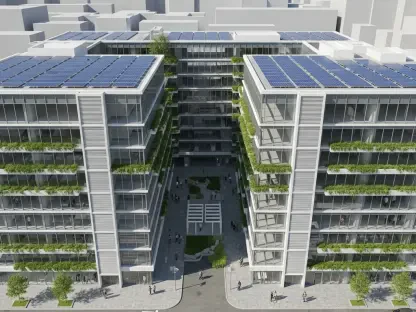
The most definitive trend shaping the Fairfax office market is the powerful and accelerating “flight to quality.” Businesses are increasingly making the strategic decision to bypass older, functionally outdated buildings in favor of Class A and trophy office spaces that offer modern designs, cutting-edge technology, and a comprehensive suite of amenities. This movement is far more than an aesthetic preference; it is a calculated business strategy aimed at winning the war for talent, fostering collaboration and innovation in a hybrid work environment, and projecting a forward-thinking corporate image. As Nathan Edwards, a senior director at Cushman & Wakefield, observes, the trend is undeniable: “Obsolescence is a real thing. The flight to quality is real.” The relocation of Iridium Communications provides a quintessential case study. After 15 years in a space that was no longer adequate, CEO Matt Desch sought a new headquarters that would serve as a “destination” and a “showcase” for the company. The favorable market allowed Iridium to choose from over 20 high-end properties before selecting a 55,000-square-foot space in Tysons, a move representing a more than $13 million investment expected to create over 100 new jobs.
This pattern of prioritizing quality is echoed in corporate moves across the county, often incorporating a “rightsizing” element where companies secure superior space but with a smaller overall footprint. For example, Fortune 500 contractor Booz Allen Hamilton announced it will move its headquarters from Tysons to a new trophy tower at Reston Row in 2028, reducing its space from 428,000 to 310,000 square feet to gain “upgraded resources.” Similarly, nonprofit government contractor Noblis is relocating to Reston Next, cutting its footprint by more than half from 160,000 to 75,000 square feet. Vehicle data company Carfax is also making a strategic move, relocating its headquarters from Centreville to a more premium 87,000-square-foot space in Reston Station. In a notable exception to the downsizing trend, cloud software company Workday is significantly expanding its presence, moving from 15,000 square feet in Tysons to over 51,000 square feet in Reston Town Center. This growth, fueled by the launch of a new subsidiary, was driven by the desire for a collaborative, campus-like setting with walkable amenities—a space “that our employees want to show up to.”
A Deliberate Reshaping of Supply
The clear bifurcation of the market has had a profound and immediate impact on the supply side, bringing new office construction to a virtual standstill. According to a Cushman & Wakefield report, the only new office delivery in Fairfax County during 2026 was the second of two towers at the mixed-use Reston Row development. With no other office groundbreakings anticipated in the near future, the scarcity of new supply is set to further intensify the competition for existing premium properties, likely driving up rents for the most desirable spaces. At the other end of the spectrum, the county faces the significant challenge of a large and growing inventory of what Nick Gregorios of Avison Young terms “nonperforming” office buildings. The stubbornly high vacancy rates in these older properties have triggered a significant decline in their assessed value. According to county data, Fairfax’s office property values plummeted by $1.35 billion, a 7.2% decline, from fiscal 2025 to fiscal 2026, creating fiscal pressure and underscoring the urgency of addressing the glut of obsolete space.
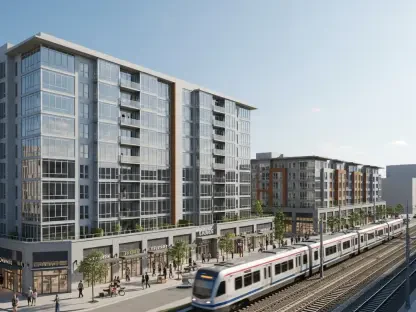
In response to these challenges, Fairfax County has proactively entered what Victor Hoskins, CEO of the county’s economic development authority, describes as a “transformation mode.” The cornerstone of this strategy is the adaptive reuse of obsolete office buildings, a process the county began incentivizing with streamlined zoning regulations in 2018. The long-term vision involves strategically culling the underperforming office stock to make way for new uses, with a primary focus on residential development to address regional housing needs. As many as 8 million square feet of office space have already been proposed for demolition or conversion. Since 2014, the county has approved the transformation of 12 former office buildings into residential properties. Hoskins projects that an additional 4 to 5 million square feet of outdated office space will be removed over the next seven years, a decisive move intended to tighten the overall market, rebalance supply and demand, and pave the way for a more modern and sustainable land-use profile.
The Path Toward a New Equilibrium
The transformation within Fairfax County’s commercial real estate market was underpinned by a powerful and diverse economy that provided a stable foundation for change. As a hub for over 10,000 technology companies and the headquarters for 11 Fortune 500 firms, the county’s economic breadth supported the strategic shifts occurring within the office sector. This period of realignment was ultimately characterized by a clear separation between outdated assets and modern, desirable workplaces. The market successfully navigated this transition by embracing the flight-to-quality trend as an opportunity rather than a threat. Signs of stabilization and renewed long-term confidence became increasingly evident as corporate decision-makers committed to the region. A critical indicator of this growing confidence was the lengthening of lease terms; among the 20 largest real estate deals in 2026, the average term reached approximately nine years. This trend was seen by experts as a positive signal of stronger tenant commitment, bringing the market closer to historical norms and demonstrating that the future of the Fairfax office was being built on a foundation of quality and long-term vision.