
The global data center industry is on the cusp of a monumental expansion, with a staggering investment projected to surpass $3 trillion by 2030, according to a new financial analysis. This construction boom, largely fueled by the voracious appetite of hyperscale cloud and technology firms, represents a powerful and enduring force in the U.S. nonresidential construction sector. However, this explosive growth, which analysis suggests is still in its early stages, is not without its hurdles. The central theme of this emerging era is the collision of unprecedented demand with mounting supply-side constraints, including severe power limitations, resource scarcity, and soaring construction costs. This article will explore how this dynamic is forcing a fundamental evolution in the financing, construction, and contractual structuring of the digital world’s essential infrastructure.
The Hyperscale Revolution: Charting the Path to a Multi-Trillion Dollar Market
To understand the magnitude of today’s data center boom, one must look at the industry’s recent transformation. The sector has shifted dramatically from an era of smaller, enterprise-owned facilities to a landscape dominated by colossal hyperscale campuses built to serve global cloud providers and tech giants. This transition was driven by the exponential growth of cloud computing, artificial intelligence, and big data, creating a demand for computing power that dwarfs all previous cycles. This historical context is critical, as it explains why traditional approaches to construction, financing, and resource planning are no longer sufficient. The scale of modern data centers—with single projects now exceeding 300 megawatts—has pushed existing infrastructure and supply chains to their breaking point, setting the stage for the complex challenges and innovative solutions defining the industry today.
Navigating the Headwinds of Explosive Growth
The Double-Edged Sword of Insatiable Hyperscale Demand
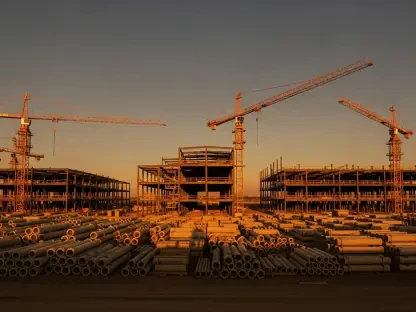
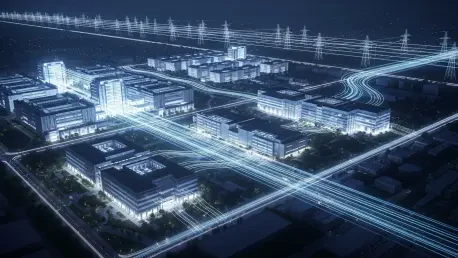
The primary engine behind this projected growth is the relentless demand from hyperscalers, which is expected to fuel double-digit expansion in data center capacity through the coming years. This surge is not just about the number of projects but their sheer scale, with massive construction pipelines promising a major boon for the industry. However, this scale presents a significant challenge. The development of 300-megawatt-plus campuses, set to come online this year, places immense strain on local power grids and resource availability. Power limitations are identified as a critical bottleneck that could significantly slow completion times, stretching project timelines and creating a fundamental conflict between the need for speed and the reality of infrastructure readiness.
The Rising Tide of Costs and Supply Chain Pressures
The explosion in demand has created a perfect storm of economic pressures, sending the cost of data center construction soaring. High global demand for both skilled labor and essential materials is creating significant bottlenecks. Miners of copper and rare earth metals, along with manufacturers of critical cooling and power equipment, are cautiously ramping up production, but forecasts suggest this will be insufficient to curb price increases. Consequently, new facilities will invariably cost more to build. Despite this, demand shows no signs of waning. The market is absorbing these higher costs, as evidenced by a sharp rise in lease prices. In Northern Virginia, the world’s largest market, hyperscale lease rates jumped from a range of $110-$150 per kilowatt per month in 2024 to $130-$190 in 2025, a trend mirrored in other major hubs like Atlanta.
A New Paradigm in Risk-Sharing and Project Delivery
To navigate these challenges, the market is adapting through a crucial evolution in risk allocation. To satisfy hyperscalers’ aggressive push for a shorter speed to market, developers are accelerating construction schedules. This is enabled by a fundamental shift in contractual agreements where tenants are now shouldering a greater share of construction delivery risk. For instance, it is increasingly common for tenants to exempt the availability of power and other key utilities from the project’s formal completion requirements. This innovative arrangement allows construction to advance and hit milestones even while utility connections lag, enabling developers to move faster despite external dependencies and potential delays.
The Future of Financing: Unlocking Capital for the Next Generation of Data Centers
This new era of large-scale, costly development is being underpinned by a sophisticated evolution in financial structures. A key innovation is the rise of financing arrangements where the construction debt is designed to be fully repaid by the developer within the tenant’s long initial lease term, which often exceeds 15 years. This model significantly de-risks the project for lenders by removing the uncertainty of future lease renewals. By mitigating this “lease renewal risk,” developers are gaining access to the vast pools of capital required to fund these ambitious builds. Project finance, corporate bank loans, private capital, and equity contributions from both developers and tenants will remain the primary funding sources, providing the financial backbone for the industry’s multi-trillion-dollar expansion.
Strategic Imperatives in a High-Stakes Environment
The key takeaways are clear: the data center industry is undergoing a period of unprecedented, demand-driven growth that is fundamentally reshaping its operational and financial landscape. This boom, however, is being tested by severe constraints in power, supply chains, and cost. In response, the industry has proven remarkably adaptive, pioneering new risk-sharing agreements and financing models to maintain momentum. For stakeholders—from investors and developers to tenants and suppliers—the primary recommendation is to embrace flexibility and collaboration. Success in this high-stakes environment will depend on the ability to forge strategic partnerships that creatively manage risk and navigate the complexities of resource scarcity and escalating costs.
Conclusion: Building the Future Amid Unprecedented Challenges
The journey toward a $3 trillion data center market was as much about overcoming obstacles as it was about seizing opportunities. The collision of hyperscale demand with real-world constraints ignited a wave of innovation that redefined how the digital world’s foundations were built and financed. While the path forward was fraught with challenges related to power, cost, and resources, the industry’s capacity for adaptation pointed to a resilient future. The core message was one of evolution: the data centers of tomorrow were built not just with steel and concrete, but with innovative contracts, sophisticated financial instruments, and a new level of strategic collaboration required to power our increasingly connected world.