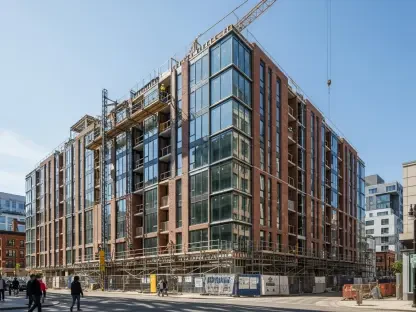

In a surprising display of resilience against a cooling national economy, the American construction sector has become an unlikely engine of job growth, adding a robust 28,000 net jobs in November and defying broader labor market trends that point toward a general slowdown. While the rest of the country grappled with rising unemployment and sluggish hiring, the construction industry, particularly its nonresidential segment, showcased remarkable strength. This divergence paints a complex picture of the nation’s economic health, where certain specialized industries are not just surviving but thriving, driven by unique and powerful market forces that set them apart from the overarching economic narrative. This surge marks a significant turnaround for a sector that struggled in the first half of the year, suggesting a renewed and concentrated demand for skilled labor that has yet to be fully satisfied.
A Tale of Two Labor Markets
The Nonresidential Construction Boom
The driving force behind the construction industry’s impressive job growth has been the nonresidential sector, which single-handedly accounted for nearly all the newly created positions. This boom is not a monolithic event but rather a multifaceted expansion across all three of its primary subcategories: nonresidential building, heavy and civil engineering, and, most notably, specialty trade contractors. The demand for these specialized skills, especially for electricians, has been supercharged by a convergence of powerful economic currents. The relentless expansion of the digital economy has fueled an unprecedented wave of data center construction, creating massive, complex projects that require a highly skilled and dedicated workforce. These facilities, the backbone of modern cloud computing and artificial intelligence, are no longer a niche market but a central pillar of nonresidential activity. This sustained investment from the tech sector has provided a stable and lucrative pipeline of work, insulating this part of the construction industry from the volatility affecting other areas of the economy and ensuring a steady need for qualified professionals to build and wire these critical infrastructure hubs.
Furthermore, the surge in nonresidential hiring extends beyond the tech-driven data center boom, with significant contributions from large-scale civil engineering projects. Renewed investment in public infrastructure, from transportation networks to energy grids, has created substantial, long-term employment opportunities. These projects, often spanning multiple years, provide a level of job security and demand that is less susceptible to short-term economic fluctuations. The intricate requirements of modern infrastructure development have placed a premium on specialty trade contractors who can execute complex tasks with precision. As a result, companies have been aggressively recruiting to staff these ambitious undertakings, leading to a notable acceleration in hiring that began in late summer. This three-month trend, which has added over 52,000 jobs since August, represents a dramatic reversal from the net loss of 9,000 jobs the industry experienced in the first eight months of the year. This stabilization and subsequent growth signal a renewed confidence among nonresidential contractors, who now anticipate continued demand for their services.
A National Economic Slowdown
In stark contrast to the vibrancy seen in construction, the broader U.S. labor market has exhibited clear signs of cooling. The national unemployment rate climbed to 4.6%, reaching its highest point since September of 2021 and signaling a potential shift in the economic landscape. This uptick in joblessness was accompanied by concerning overall employment figures; after a net loss of 105,000 jobs in October, the economy managed to add only a modest 64,000 positions in November. This tepid growth falls short of what is needed to keep pace with population growth and stands as a testament to the mounting pressures on businesses across various sectors, from rising interest rates to shifting consumer demand. The construction industry’s ability to maintain a steady unemployment rate of 4.1% during this same period highlights its unique position as an outlier. While other industries began to pull back on hiring or even resort to layoffs, construction firms, particularly on the nonresidential side, continued to expand their payrolls, creating a clear and widening divergence in labor market performance.
This contrast underscores the sector-specific nature of the current economic climate, where aggregate national data can mask pockets of significant strength. The year-over-year employment growth in construction, which saw a net addition of 58,000 jobs for a 0.7% increase, further solidifies its resilient performance. While this figure may seem modest, it is particularly noteworthy when set against the backdrop of a national economy struggling to maintain momentum. The factors contributing to the broader slowdown are varied and complex, including persistent inflation, global supply chain uncertainties, and the lagging effects of monetary tightening policies. These headwinds have created a cautious business environment, prompting many companies to pause hiring plans or streamline operations. The construction sector’s ability to navigate these challenges, buoyed by long-term projects and specific market demands, has made it a crucial, if unexpected, source of stability and job creation in an otherwise precarious economic moment.
Navigating a Complex Outlook
Persistent Labor Shortages
Despite the surge in hiring and the overall positive employment figures, a significant underlying challenge continues to plague the construction industry: a persistent and widespread shortage of qualified labor. While contractors are adding workers to their payrolls, many report that the process of finding and retaining skilled talent remains exceptionally difficult. An analysis from the Associated General Contractors of America reveals that a majority of firms are still struggling to fill open positions, a problem that spans multiple regions and specialties. This paradox of strong hiring numbers coexisting with acute labor shortages points to a fundamental mismatch between labor supply and demand. The skills required for modern construction projects, particularly in specialized fields like electrical work, heavy equipment operation, and civil engineering, are not readily available in the current labor pool. This scarcity forces companies to compete fiercely for a limited number of qualified candidates, often driving up wages and extending project timelines.
The roots of this labor crisis are deep and multifaceted, stemming from long-term trends that predate the current economic cycle. An aging workforce, with a significant portion of skilled tradespeople nearing retirement, is a primary contributor. For decades, there has been a societal push toward four-year college degrees over vocational training, leading to a diminished pipeline of new talent entering the trades. This has created a skills gap that the industry is now struggling to close. Even as employment opportunities expand into more regions of the country, the lack of available, project-ready workers acts as a significant brake on the industry’s potential growth. This ongoing struggle to adequately staff job sites means that even with strong backlogs and optimistic forecasts for future work, many contractors may find their ability to take on new projects constrained not by a lack of demand, but by a lack of people.
A Divided Industry and Future Headwinds
The optimistic narrative surrounding nonresidential construction hiring was tempered by the ongoing struggles within the residential building segment, which continued to shed jobs. This internal division created a nuanced industry outlook where one half thrived while the other contended with market headwinds, primarily driven by higher interest rates impacting housing affordability and new home construction. This divergence underscored how sensitive different parts of the industry were to macroeconomic policies. While large-scale, often publicly funded or corporate-backed nonresidential and infrastructure projects moved forward, the consumer-facing residential market proved far more vulnerable to economic tightening. This split suggested that while overall industry employment figures appeared robust, the foundation of that growth was narrow, relying heavily on specific subsectors to carry the momentum.
Ultimately, the period revealed a construction industry at a crossroads, defined by both remarkable strength and significant structural challenges. The surge in nonresidential hiring demonstrated the sector’s capacity for robust growth, fueled by long-term investments in technology and infrastructure that insulated it from the broader economic cooling. At the same time, the persistent difficulty contractors faced in finding qualified workers highlighted a critical skills gap that had become a major impediment to progress. The challenges faced by the residential sector served as a potent reminder of the industry’s susceptibility to fluctuating financial conditions. This complex interplay of forces left an indelible mark, emphasizing that future stability would depend not just on securing new projects, but on building a sustainable and skilled workforce capable of meeting the evolving demands of a modern economy.