
With a deep background in construction, design, and the innovative application of technology, Luca Calaraili offers a unique perspective on the evolution of modern buildings. He joins us to discuss the intricate dance between high-end architecture and the foundational digital infrastructure that powers it. We will explore the monumental connectivity project at Chelsea Barracks, delving into the benefits of integrating technology from the ground up, how this invisible framework enhances the luxury living experience, and what the future holds for smart residential developments in the age of 5G.
The Chelsea Barracks project involved installing an extraordinary 755 antennas. Could you describe the primary technical challenges of such a large-scale deployment in a luxury residential setting and the steps you took to guarantee seamless connectivity across all major networks for every resident?
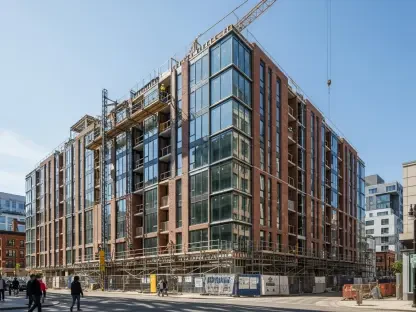
A deployment of that magnitude, with 755 antennas, is a monumental undertaking, especially in a place defined by uncompromising quality. The primary challenge in a luxury setting isn’t just the sheer number; it’s the environment itself. The very materials that create that sense of opulence—dense concrete, specialized glazing, and intricate architectural elements—are natural enemies of mobile signals. We had to engineer a solution that could overcome these physical barriers without a single compromise. It required meticulous, early-stage planning to ensure that every single residence, from a garden apartment to the highest penthouse, receives fast and consistent service on all major networks. It’s a bit like designing a building’s circulatory system; it has to be perfectly integrated and completely invisible to work.
Integrating connectivity during a building’s construction phase is a core part of your approach. What are the key advantages of this method over retrofitting later, and can you share a specific example of how this preserved the high-end aesthetic integrity at Chelsea Barracks?
The advantages are immense, touching on efficiency, cost, and most importantly, the final aesthetic. When you embed this technology from the earliest stages, it becomes part of the building’s DNA. Retrofitting is always a compromise; you’re drilling into finished walls, running cables where they were never meant to be, and trying to hide hardware. It’s invasive and can feel like an afterthought. By integrating during construction, we could work directly with the architects and designers. For example, we could conceal antennas within ceiling cavities or behind custom joinery before the final finishes were even applied. The result is that the technology is completely invisible. A resident experiences perfect connectivity without ever seeing a single piece of the complex infrastructure that delivers it, preserving the clean lines and world-class design of the space.
For residents in a luxury development like Chelsea Barracks, what does “best-in-class” mobile connectivity mean in practical terms? Beyond fast speeds, how does this level of integrated infrastructure enhance their daily lives and the overall functionality of their homes?
In a development like this, “best-in-class” connectivity is the foundation of the entire living experience. It’s not just about streaming a movie without buffering. It’s about the seamless functionality of the entire home. Think about integrated smart home systems, security features that rely on a constant connection, or simply the ability to conduct a critical video conference from a home office with absolute confidence. This level of reliability means the technology just works, effortlessly and in the background. It enhances every aspect of their life, providing a sense of security and convenience that becomes integral to the feeling of home. It’s the invisible utility that powers the modern luxury lifestyle.
You have experience connecting large public venues like stadiums and hospitals. How did the requirements at a high-end residential development differ from those projects, and what unique lessons from Chelsea Barracks will influence your approach to future smart-building installations?
The core technical principles are similar, but the application is worlds apart. In a stadium or a hospital, the focus is on capacity and coverage for a large, transient population in open spaces. The infrastructure can be more visible and industrial. In a high-end residential setting like Chelsea Barracks, the focus shifts to discreet, flawless performance within hundreds of individual, private spaces. The key lesson was the paramount importance of collaboration with the design team. We learned that to be truly successful, the digital infrastructure can’t just be a technical layer added on top; it must be woven into the architectural vision from day one. This project reinforced that the ultimate luxury is technology that is felt but never seen, and that’s a principle we’ll carry into every future smart building.
What is your forecast for the future of in-building cellular connectivity, particularly as 5G technology becomes more widespread in residential and commercial developments?
The future is about creating buildings that are not just connected, but truly intelligent and responsive. As 5G becomes the standard, the demand for robust in-building solutions will explode. 5G operates on higher frequencies that have more difficulty penetrating building materials, making professional, integrated installations absolutely essential, not just a luxury. We’re moving beyond simple connectivity for phones and laptops. We’ll see buildings where 5G underpins everything from IoT device management and building automation to immersive augmented reality experiences for residents and guests. The building itself will become a dynamic, future-ready platform, and the work we’re doing now is laying the critical groundwork for that reality.