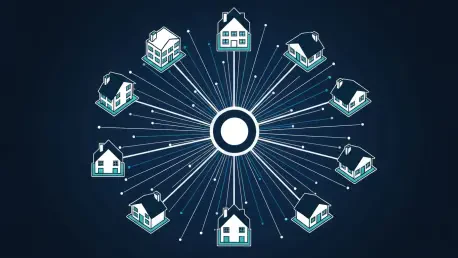

In a challenging economic climate marked by rising operational costs and moderated growth, property owners and operators are discovering that the most significant opportunities for value creation now lie within their existing portfolios. The industry is undergoing a foundational shift, moving away from traditional, decentralized management practices toward highly centralized, technology-enabled systems. This strategic pivot is no longer an optional trend but an essential evolution for streamlining operations, enhancing the resident experience, and ultimately protecting net operating income. For forward-thinking leaders, embracing this transformation is the key to building a resilient and profitable business model capable of withstanding market volatility and capitalizing on future growth. The convergence of economic pressures and technological advancements has created a new imperative: innovate internally or risk falling behind.
The New Imperative for Operational Excellence
The residential rental market has long been noted for its inherent resilience, particularly for multifamily and single-family rental (SFR) communities that benefit from sustained demand due to national housing shortages and the high costs of homeownership. However, this stability is now being tested by a new wave of economic headwinds, including escalating operating expenses and stricter financing conditions that make new acquisitions less feasible. These factors compel owners to shift their focus from external expansion to maximizing the performance of their existing assets. This internal focus requires a rigorous approach to operational efficiency, where every process is scrutinized for potential improvements. The mandate is clear: value must be created from within, transforming day-to-day management from a cost center into a strategic driver of profitability and long-term asset value.
With external growth opportunities constrained, the spotlight has turned inward toward achieving operational excellence as the primary means of enhancing portfolio performance. The central objective for owners and operators is to strengthen net operating income (NOI) by running their properties more effectively. This goal is being realized through two interconnected strategies: the outsourcing of non-core functions and, more critically, the adoption of sophisticated technology that automates processes and centralizes control. While outsourcing can provide immediate relief, it is the strategic implementation of technology that offers a sustainable, long-term solution. By centralizing functions such as maintenance, leasing, and accounting, operators can achieve economies of scale, enforce consistent standards across their portfolio, and gain unprecedented insight into operational performance through data analytics.
Expanding the Role of Technology
While technology has been a part of property management for years, its application was often limited to front-end tasks like digital leasing and online rent collection. Its role has now dramatically expanded into more complex, back-end functions that form the operational backbone of the business. Advanced platforms now manage a wide range of activities, including sophisticated accounting, long-term capital planning, utility and energy monitoring, and regulatory compliance. Most significantly, technology is revolutionizing maintenance management, a traditionally reactive and costly area. By moving from simple convenience tools to a core operational engine, technology now enables a proactive, data-driven approach to asset preservation and service delivery, directly impacting both the resident experience and the bottom line. This marks a definitive shift toward technology as an indispensable strategic asset.
The concept of centralization is especially transformative for the single-family rental (SFR) sector, where portfolios are often geographically dispersed. Unlike multifamily properties where hundreds of units are co-located, managing thousands of individual homes across different markets with a traditional on-the-ground presence is both inefficient and prohibitively expensive. Centralized, tech-driven systems make it possible to coordinate repairs, resident communications, and property turns at scale without maintaining a large, distributed staff. This model, powered by technology, allows for efficient management and consistent service quality across an entire portfolio, a feat that was previously considered nearly impossible. By leveraging a central hub for operations, SFR managers can streamline workflows, optimize resource allocation, and provide a superior resident experience that rivals, and often exceeds, that of traditional apartment living.
Addressing Labor and Resident Experience
The move toward centralization is also a direct and effective response to persistent labor market issues. Rising labor costs and high employee turnover make it difficult to maintain fully staffed property and maintenance teams, placing significant strain on operations. Existing on-site staff are often overburdened with a growing list of responsibilities, including administrative tasks for which they may lack specific expertise. Technology directly addresses this challenge by automating repetitive duties such as service request intake, scheduling, and basic troubleshooting. This automation frees up valuable staff time, allowing them to concentrate on higher-value, strategic activities. For multifamily managers, this means more time dedicated to building resident relationships and fostering a sense of community, which are proven drivers of retention. For SFR operators, it makes a lean, centralized model viable without sacrificing service quality.
As the industry matures, the focus has shifted from experimenting with novel tools to adopting proven technology solutions that deliver an immediate and measurable return on investment (ROI). Owners and operators are no longer chasing novelty but are instead seeking systems that reduce operational friction from day one. In maintenance, for example, the most effective platforms are those that can diagnose issues remotely before dispatching a technician, automatically optimize scheduling and routing for maintenance staff, provide residents with real-time updates on service requests, and centralize vendor management. The impact of this data-driven technology is twofold: it delivers tangible cost savings and creates more predictable service outcomes. Furthermore, it significantly improves resident satisfaction, which is a direct driver of lease renewals and, consequently, long-term revenue stability and growth.
Building a Foundation for Future Resilience
This industry-wide transformation represented a permanent and foundational shift in the business of property management, not merely a temporary adaptation to market conditions. The pressures to achieve more with less, driven by economic uncertainty, labor challenges, and rising resident expectations, became persistent realities. In this environment, the operators who thrived were those who fundamentally restructured their operating models around proven technology and centralization. The emphasis settled on adopting reliable systems that offered immediate results over unproven upstarts, thereby lowering implementation risk. Ultimately, this evolution created an operating model that was inherently more resilient and capable of withstanding market volatility while consistently delivering measurable financial results. By embracing technology as a foundational pillar, property owners and operators not only protected their profitability but also positioned themselves for strategic growth when future market opportunities arose.