
A new housing development in Pocatello, the Steel Hollow Cottage Community, is not just nearing completion but is simultaneously highlighting a profound and unmet need for more affordable, non-traditional rental housing within the city. This project, which transforms a once-vacant lot at 620 Jefferson Avenue into a thoughtfully designed community of 16 individual cottages, serves as a powerful case study in innovative housing solutions. With six of its units already leased before the scheduled January completion date, the development’s instant popularity underscores a critical market imbalance. The swift absorption of these properties points to a larger national trend where renters, particularly individuals and couples, are seeking alternatives to conventional apartments and large single-family homes. They desire the privacy of a standalone structure without the financial burden or maintenance of a larger property. The success of Steel Hollow suggests that small-scale, high-quality developments may hold a key to unlocking inventory in a housing market strained by a severe lack of accessible and desirable options.
The Micro-Community Model in Action
Designing for Density and Desirability
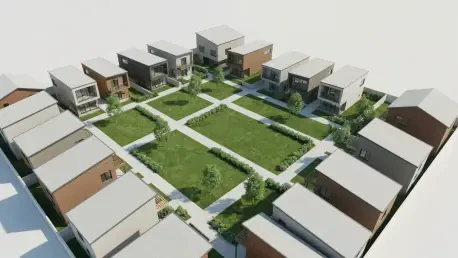
The strategic design of the Steel Hollow Cottage Community, owned by Dakota Worrell of DW Investors, directly addresses the dual challenges of land scarcity and housing demand. By employing a cottage court-style layout, the developers were able to maximize the density on a relatively small urban lot, fitting 16 standalone homes where a conventional project might have placed far fewer. Each cottage provides approximately 460 square feet of living space, a footprint specifically tailored to the needs of its target demographic—single professionals, couples, and downsizers who value privacy and independence over sheer size. This approach cleverly bypasses the common drawbacks of apartment living, such as shared walls and noisy neighbors, offering residents their own detached space. Furthermore, the layout fosters a sense of community while ensuring adequate parking and personal space, creating a neighborhood feel that is often absent in high-density rental complexes. This intentional design philosophy proves that compact living does not have to mean compromised living.
Beyond its efficient use of space, the project distinguishes itself through a commitment to aesthetic appeal and quality finishes, challenging the notion that affordable housing must be generic. To avoid a monolithic appearance, the developer introduced three distinct unit styles—the Foundry, the Forge, and the Mill—which feature unique interior color palettes, backsplashes, and exterior design elements. This variation lends the community a custom-built character, making it more attractive to prospective tenants seeking a home with personality. Inside, despite the modest square footage, the cottages are appointed with high-end features typically found in more expensive properties, including custom wood cabinetry and premium tile work. This focus on quality materials and craftsmanship elevates the living experience, positioning the units as a premium rental option. By merging thoughtful design with quality construction, the Steel Hollow community demonstrates that small-footprint housing can be both highly functional and genuinely desirable.
A Response to Market Imperatives
The rapid leasing of the Steel Hollow cottages is a direct reflection of a severe and well-documented market failure. Brandon DesFosses of Idaho Management, the firm overseeing the property, highlights a stark reality in the Pocatello rental market: there is a near-zero vacancy rate for properties priced at or below $1,200 per month. The monthly rent for the Steel Hollow units, set at $1,100, falls squarely within this high-demand, low-supply price bracket. The fact that more than a third of the units were rented months before the project’s full completion serves as undeniable evidence of the immense pent-up demand for this specific type of housing. This is not merely a successful launch; it is a clear market signal that a significant segment of the population is being underserved by the current housing stock. The project’s success validates the developer’s hypothesis that there is a robust market for well-designed, private, and affordable rental homes that bridge the gap between cramped apartments and expensive single-family houses.
The implications of the Steel Hollow project extend far beyond its property lines, offering a crucial lesson for city planners and developers across the region. DesFosses asserts that this single development is a blueprint for what the city desperately needs, calling for dozens of similar projects to meet the overwhelming demand. Its success provides a tangible, market-tested model that can be replicated to systematically address the local housing shortage. For developers, it proves that building smaller, high-quality units at an affordable price point is a financially viable and low-risk venture. For municipal governments, it showcases the potential of innovative zoning and land-use policies that encourage such infill developments. The Steel Hollow community is more than just 16 new homes; it is a proof of concept that challenges conventional development patterns and offers a practical, scalable solution to the pressing need for accessible housing in growing cities like Pocatello.
Broader Implications for Urban Development
The Scalability of Small Home Solutions
The success observed in Pocatello is not an isolated phenomenon but rather a local manifestation of a growing national movement toward small-scale living solutions. Across the country, cities grappling with affordability crises are beginning to explore cottage communities, tiny home villages, and accessory dwelling units (ADUs) as viable strategies to increase housing stock. These models offer a way to gently increase density in established neighborhoods without the drastic visual impact of large apartment towers. However, their widespread adoption is often hindered by outdated zoning regulations designed for a different era of suburban expansion. Projects like Steel Hollow serve as invaluable case studies, providing concrete data that can persuade municipal leaders to modernize their land-use codes. By demonstrating both market demand and positive community integration, such developments build a compelling case for regulatory reforms that would permit more diverse and flexible housing types.
From an investment standpoint, the small home community model presents a compelling business case that aligns profit motives with pressing social needs. For developers, constructing smaller, standardized units can lead to significant cost savings in materials and labor, as well as faster construction timelines compared to larger, more complex buildings. This accelerated schedule reduces carrying costs and allows for a quicker return on investment. Furthermore, as demonstrated by the Steel Hollow experience, the high demand for such units can lead to rapid lease-up periods, minimizing vacancy losses and stabilizing cash flow almost immediately. The ability to achieve a higher rent per square foot than larger units, combined with the strong market absorption, makes these projects financially attractive. This economic viability is crucial, as it provides the necessary incentive for the private sector to invest in building the affordable housing that communities desperately need.
A New Paradigm for Rental Living
The appeal of cottage communities like Steel Hollow signals a fundamental shift in the preferences and priorities of a growing segment of the rental population. For many, the traditional choice between a large, maintenance-heavy single-family home and an anonymous, crowded apartment complex is no longer appealing. Today’s renters, from young professionals to empty nesters, increasingly prioritize a lifestyle that balances privacy with a sense of community and convenience. The small home model perfectly caters to this demand by offering the autonomy of a detached dwelling—complete with a private entrance and no shared walls—alongside the low-maintenance benefits of a rental. The “cottage court” layout encourages neighborly interaction and a shared sense of place, creating a micro-community that is often missing in modern housing. This trend reflects a broader cultural move towards more intentional and efficient living, where the quality of space is valued more than the quantity of it.
A Proven Model for Urban Housing
The Steel Hollow Cottage Community ultimately delivered more than just 16 new homes; it provided a clear and compelling proof of concept for tackling a specific and critical segment of the housing crisis. The project’s immediate success demonstrated that immense, untapped demand existed for well-designed, high-quality, and private small homes at an accessible price point. It confirmed that the solution was not merely about building smaller, but about building smarter—creating a desirable product that offered a superior living experience compared to other options in its price range. The development stood as a tangible blueprint for future growth, showing developers a financially viable path and offering city planners a model for effective urban infill. The key takeaway was not simply that a housing shortage existed, but that a market-driven, scalable solution had been successfully tested and validated, paving the way for its replication.