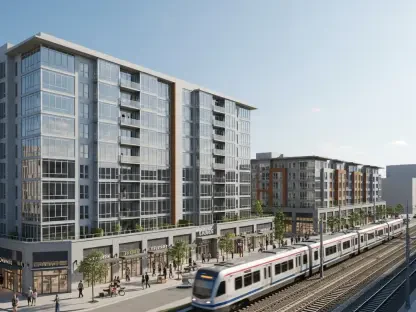

The UK’s student housing crisis has become a defining challenge for higher education, with soaring demand and lagging supply leaving thousands of students in a desperate scramble for affordable, quality accommodation. Against this backdrop, Manchester-based developer Abode Student has announced an £80 million investment into a new purpose-built student accommodation (PBSA) portfolio. This initiative promises to deliver 525 modern, affordable beds in key regional university cities. While a significant injection of capital, the central question remains: is this a scalable blueprint that can genuinely alleviate the crisis, or is it merely a drop in a vast and troubled ocean? This article will dissect Abode’s strategy, analyzing its potential impact on the market and exploring whether its focus on affordability, sustainability, and strategic location offers a viable path forward for the embattled PBSA sector.
The Perfect Storm: How Supply, Demand, and Quality Created a Crisis
Today’s student housing shortage is not a recent phenomenon but the culmination of years of mounting pressure. A consistent rise in university enrollment, particularly from international students, has dramatically outpaced the construction of new housing. For decades, students relied on the private rental sector, often enduring poorly maintained houses in multiple occupation (HMOs) with absentee landlords and escalating rents. The emergence of the PBSA sector was a direct response, offering a higher standard of living with all-inclusive bills and modern amenities. However, much of the early PBSA development focused on the premium end of the market, creating luxury units that were financially out of reach for the average student. This has created a critical gap in the market for high-quality, yet affordable, accommodation, particularly in thriving regional university hubs where the housing crunch is most acute.
Deconstructing the £80M Strategy: A Model for the Future?
The Affordability Equation: Balancing Prime Locations with Realistic Rents
At the heart of Abode Student’s strategy is a direct confrontation with the affordability crisis. The plan allocates £80 million to two developments: “Abode Student Wireworks” in Birmingham and “Abode Student Leatherworks” in Nottingham, with rental rates starting from £175 and £198 per week, respectively. In a market where students are often forced to pay a premium for proximity to campus, these rates are intentionally competitive. The investment’s viability is reinforced by strong financial projections, targeting a 5.75% net initial yield and occupancy rates over 96%. This demonstrates a crucial point: providing reasonably priced housing does not have to come at the expense of a robust business case. By carefully selecting prime locations in high-demand “Knowledge Quarters” and near major universities, Abode aims to prove that location and affordability can coexist, challenging the industry assumption that one must be sacrificed for the other.
Built to Last: The Financial and Ethical Case for Sustainable Design
Moving beyond immediate rental costs, Abode’s model integrates a long-term vision centered on durability and sustainability. Through its “Refined Durability” design philosophy, developed with Miminat Designs, the company is prioritizing high-performance materials engineered to withstand the rigors of student life. This approach is not just about aesthetics; it is a calculated financial strategy to reduce ongoing maintenance and lifecycle costs, which in turn helps keep rents stable and predictable. This commitment is coupled with ambitious environmental targets, including BREEAM Excellent and EPC A ratings, achieved through features like air source heat pumps and rainwater harvesting. This dual focus on economic and environmental sustainability makes the developments more attractive to ethically-minded students and ESG-focused institutional investors, positioning the portfolio for long-term resilience and success.
Beyond the Midlands: A Strategic Blueprint for Regional Expansion
The initial investment in Birmingham and Nottingham is not an isolated venture but the first phase of a broader, calculated expansion. Abode Student has already identified its next targets, including Manchester, Sheffield, Leeds, and Bristol—all major regional university cities facing their own significant housing pressures. This targeted approach avoids the oversaturated and prohibitively expensive London market, instead focusing on areas with a clear and growing need. Each city presents a unique set of challenges and opportunities, but the core blueprint remains the same: deliver well-located, durable, and affordably priced accommodation. By proving the model’s success in the Midlands, Abode is creating a replicable template that can be adapted to other regional hubs, suggesting that this £80 million is not just a one-off project but seed capital for a nationwide strategy.
The Future of PBSShifting from Luxury Niches to Mainstream Necessities
Abode Student’s initiative is a strong indicator of a wider market correction within the PBSA sector. The era of focusing predominantly on luxury, high-end studios appears to be giving way to a more pragmatic approach centered on delivering value and necessity. Future developments will likely follow this trend, prioritizing affordability and functional design over superfluous amenities. Sustainability is no longer a “nice-to-have” but a core requirement, driven by regulatory pressure, investor demand, and student expectations. As developers look for growth, the focus will continue to shift toward regional cities where the supply-demand imbalance is most severe, and the potential for positive impact is greatest. This evolution from niche luxury to essential infrastructure will be critical in shaping a more stable and equitable student housing market.
Key Takeaways: A Replicable Model for a Pressing Problem
The analysis of Abode Student’s £80 million portfolio yields several crucial insights. While this sum alone cannot single-handedly solve a nationwide crisis, its strategic allocation offers a powerful and replicable model for the industry. The primary takeaway is that financial viability and student affordability are not mutually exclusive; a carefully planned project in a high-demand regional location can deliver both. Furthermore, integrating sustainability and long-term durability from the design phase is a shrewd investment that lowers operational costs and enhances asset value. For other developers, the recommendation is clear: pivot from luxury-first models to value-driven strategies in underserved regional markets. For universities, partnering with developers who share this ethos can help secure the well-being of their student populations.
A Meaningful Step, Not a Final Solution
In conclusion, the analysis of this £80 million investment determined it would not solve the UK’s student housing crisis overnight. However, to have dismissed it as a mere drop in the ocean would have missed its strategic importance. Abode Student’s investment represented an intelligent and scalable response to the market’s most urgent needs. By weaving together affordability, prime regional locations, and a long-term vision for sustainability, it provided a compelling blueprint for the future of purpose-built student accommodation. The initiative was ultimately seen as a significant step in the right direction—a call to action for the wider industry to shift its focus from chasing the highest margins to building a stable, equitable foundation for student living.