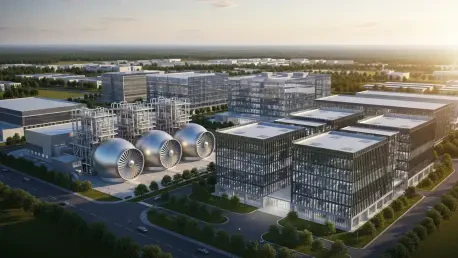

The quiet landscape of Pike County, Ohio, is currently transforming into the epicenter of a global technological shift as a massive thirty-three billion dollar infrastructure project begins to take shape. This initiative represents a sophisticated public-private partnership between the United States government, Japan-based SoftBank Group, and regional energy provider AEP Ohio, all working under the framework of the U.S.-Japan Strategic Trade and Investment Agreement. The primary objective is to establish ten gigawatts of new energy capacity, with nine point two gigawatts specifically sourced from natural gas generation to satisfy the voracious appetite of a sprawling artificial intelligence data center complex. By moving beyond theoretical discussions about the power requirements of next-generation computing, this development anchors the future of digital processing in physical reality. This massive infusion of capital and engineering prowess highlights the critical need for dedicated energy sources that can sustain the continuous, high-intensity workloads required for modern machine learning and neural network training at scale.
Industrial Synergy: The Portsmouth Consortium
To manage the immense complexity of this undertaking, the Portsmouth Consortium was established as a strategic alliance involving twenty-one distinct companies with deep roots in industrial engineering and technology. Leading the massive construction efforts are two of the most prominent American contractors, Bechtel and Kiewit, who are tasked with delivering infrastructure that integrates power generation and data management in a single, parallel workflow. This integrated approach marks a significant departure from traditional development cycles where utility upgrades and facility construction were treated as separate, sequential phases. Bechtel’s leadership emphasized that this unified strategy is the only viable method to bring substantial AI capacity online at the speed and reliability currently demanded by the global market. By synchronizing the build-out of gas turbines with the installation of server racks, the consortium aims to eliminate the typical delays associated with grid interconnection, ensuring that the facility is operational as soon as the physical structures are completed later this year.
The financial magnitude of the Pike County development is a key component of a larger five hundred and fifty billion dollar investment pledge from Japanese entities into American energy and manufacturing sectors. U.S. Commerce Secretary Howard Lutnick has identified this specific Ohio project as the largest active construction site in the nation, underscoring its pivotal role in strengthening domestic technological infrastructure. While many tech hubs have struggled with the limitations of aging electrical grids, this project leverages reliable natural gas as a bridge to meet unprecedented electricity requirements that renewable sources cannot yet provide at this scale. The reliance on traditional energy sources reflects a pragmatic shift in the industry, acknowledging that the immediate power demands of global AI hubs require a base-load capacity that is both scalable and resilient. This strategy not only secures the necessary energy for digital expansion but also revitalizes the regional economy by creating thousands of specialized jobs in construction, engineering, and data center operations within a traditionally industrial corridor.
Strategic Trajectory: Future Global Standards
Looking ahead, the success of the Pike County model suggested that the path to sustaining the artificial intelligence revolution required a radical rethinking of how energy and data are coupled. As this project moved from the planning phase into active construction during the latter half of 2026, it provided a blueprint for other nations to follow regarding international capital cooperation and industrial speed. Stakeholders must now focus on diversifying the energy mix by exploring how small modular reactors or advanced carbon capture technologies could eventually supplement these natural gas foundations to meet long-term sustainability goals. Furthermore, the collaboration between the United States and Japan demonstrated that reducing development risks through shared technical expertise and capital was essential for maintaining a competitive edge in the global tech landscape. Moving forward, policymakers and private investors should prioritize the creation of similar specialized industrial zones that can support the high-density power needs of future computing. By aligning strategic trade interests with localized infrastructure investments, the industry ensured that the physical constraints of power would not hinder the rapid evolution of digital intelligence.