
A promising future for low-carbon manufacturing in Holyoke, Massachusetts, came to a sudden halt not because of a technological failure or a market downturn, but because of a shift in the political winds blowing from Washington, D.C. For Sublime Systems, a company poised to revolutionize the cement industry, the dream of its first commercial plant became a casualty of policy reversal, a stark reminder of the fragile ground upon which America’s green transition is being built. This single event raises a critical question for an entire generation of innovators and investors: how can long-term industrial projects endure the volatile, short-term cycles of American politics? The answer lies in understanding the anatomy of these reversals and forging new strategies for resilience.
The Precarious Foundation of Federally Funded Green Innovation
The abrupt pause on Sublime Systems’ pioneering low-carbon cement plant serves as a powerful case study in political risk. The project, which promised to bring both sustainable technology and valuable manufacturing jobs to its community, was stopped in its tracks when its foundational federal funding was rescinded. This incident highlights a growing tension within the national strategy for industrial renewal, where ambitious, multi-year ventures are increasingly dependent on financial commitments that can evaporate with a change in administration.
This intersection of long-term industrial timelines and short-term political cycles has become a critical point of failure. Projects in clean energy, advanced manufacturing, and sustainable materials require years of planning, development, and capital investment to reach commercial scale. When government grants and partnerships form a significant part of their financial structure, these ventures become exceptionally vulnerable to policy whiplash. The resulting uncertainty not only endangers individual projects but also threatens to derail the broader momentum of America’s green industrial transition.
This analysis explores the deep-seated challenges posed by this instability. By examining the mechanics of the policy reversal that impacted Sublime Systems, its chilling effect on the wider investment landscape, and the adaptive strategies companies are now forced to consider, a clearer picture emerges. The goal is to identify how innovators, investors, and policymakers can work to protect progress and build a more durable foundation for the industries of the future.
The Anatomy of a Reversal When Policy Becomes a Projects Greatest Risk
A Crack in the Capital Stack The Collapse of the Holyoke Plant Project
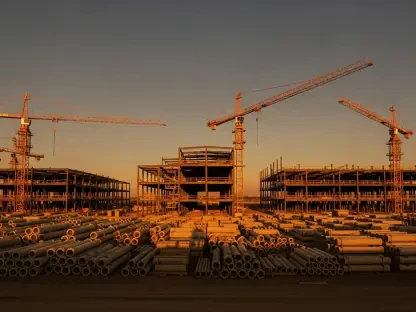
Sublime Systems had laid out an ambitious vision for its Holyoke facility, which was slated to begin operations in early 2026. The plant was designed to produce up to 30,000 tons of low-carbon cement annually, a significant step forward in decarbonizing the construction industry. Beyond its environmental impact, the project carried a substantial economic promise for the region, with plans to create hundreds of temporary construction jobs and establish between 70 and 90 permanent, high-quality positions upon completion.
At the heart of the project’s financial structure, or its “capital stack,” was a critical $87 million grant from the U.S. Department of Energy (DOE). Awarded in March 2024, this federal commitment was designed to cover half of the total plant costs, making it the cornerstone of the entire endeavor. The sudden cancellation of this grant blew a hole in the company’s financing, leaving a massive gap that could not be immediately filled and destabilizing the delicate balance of public and private investment.
The immediate fallout was severe. Sublime Systems was forced to pause all construction activities on the Holyoke site, putting the project’s future in jeopardy. This operational halt was accompanied by a painful organizational restructuring, leading to the layoff of 10% of the company’s workforce. The incident demonstrated how quickly a promising industrial venture can be derailed when its financial foundation is tied too closely to the shifting priorities of the federal government.
From Targeted Investment to Political Takedown A Nationwide Funding Freeze
The decision impacting Sublime Systems was not an isolated event but part of a much broader policy action. On October 2, the DOE announced the termination of 321 financial awards tied to 223 different projects. A striking pattern emerged: all of the affected projects were located in states that had voted for former Vice President Kamala Harris in the 2024 general election, suggesting a politically motivated decision.
The Trump administration provided an official justification for this sweeping $7.5 billion funding clawback. It stated that an internal review had determined the canceled projects failed to meet newly prioritized standards for economic impact, national security, or energy security. This rationale, however, was met with skepticism from industry observers, who saw the move as a direct use of federal funds for political retribution.
This action raises profound questions about the role of federal funding in a national industrial strategy. When financial awards are perceived as tools for political leverage rather than instruments for strategic, long-term development, it erodes trust between the public and private sectors. Such moves create an unpredictable environment that discourages investment and undermines the goal of building a resilient, domestically-focused industrial base.
The Chilling Effect on Construction and Clean Tech Investment
The abrupt cancellation of federal commitments has sent a wave of uncertainty through the construction, development, and clean-tech investment communities. Companies that once viewed federal grants and partnerships as reliable pillars of their financial plans now see them as a significant source of risk. This newfound apprehension complicates financial modeling and makes it harder for developers to secure the private capital needed to get projects off the ground.
This single policy action reinforces a growing trend of instability that discourages risk-taking in capital-intensive green ventures. Clean-tech and sustainable manufacturing projects often require immense upfront investment and long payback periods, making them particularly sensitive to policy uncertainty. When the government’s commitment is seen as unreliable, private investors become hesitant to deploy the billions of dollars necessary to build the factories and infrastructure of the future.
Ultimately, this unpredictability poses a direct threat to strategic national goals, including the onshoring of critical manufacturing and U.S. competitiveness in sustainable materials. If domestic companies cannot rely on stable government partnership, the development of next-generation industries may slow, ceding leadership to international rivals operating in more predictable policy environments. The result is a lost opportunity for economic growth and technological leadership.
Pivoting Under Pressure The Search for New Lifelines and Resilient Strategies
Despite the significant setback, Sublime Systems is actively working to find a new path forward. The company announced it is developing a “robust set of alternative scale-up plans” to bring its low-carbon cement to market. This proactive response demonstrates a commitment to its mission, even in the face of a destabilizing loss of federal support.
Companies caught in this policy reversal are also refining their strategic arguments to the DOE and other potential partners. They are emphasizing the non-partisan, strategic value of their projects, highlighting contributions to domestic manufacturing, supply chain resilience, and reduced reliance on imports from geopolitical competitors. This reframing aims to align their goals with enduring national interests that transcend short-term political disputes.
The crisis is also accelerating a search for alternative financing models that can better insulate projects from political shocks. Companies and investors are increasingly exploring diversified strategies, including stronger partnerships with state and local economic development agencies, strategic investments from large corporations seeking to secure their supply chains, and blended finance structures that combine philanthropic capital with private equity. These models aim to create a more resilient capital stack that is not overly dependent on a single, politically vulnerable funding source.
Building a Buffer Fortifying Green Ventures Against Political Instability
The Sublime Systems case exposed several primary vulnerabilities common to federally-backed green projects. Chief among them were an over-reliance on a single, large government grant and a collective underestimation of the speed and severity with which political winds can shift. This episode serves as a critical lesson for the entire clean-tech industry: financial and strategic planning must now explicitly account for political whiplash as a primary operational risk.
In response, companies are developing more robust and diversified strategies. One key approach is to build a more resilient capital stack from the outset, blending federal support with private equity, venture capital, and strategic corporate partnerships. Another crucial tactic is securing deep, bipartisan support at the local and state levels, creating a political buffer that can help shield a project from federal volatility. Additionally, phasing project development to align with smaller, more manageable funding milestones can reduce the impact of any single grant cancellation.
For investors, this new reality demands a more sophisticated approach to due diligence. Evaluating long-term infrastructure and industrial projects now requires a rigorous assessment of political risk. This involves analyzing a project’s exposure to policy shifts, the political landscape of its location, and the durability of its public support. Moving forward, the ability to accurately price this political risk will become a key differentiator for successful investment in the green transition.
Forging a Lasting Commitment Beyond the Boom and Bust Cycle of Green Policy
The turbulence faced by innovators like Sublime Systems reinforces a critical conclusion: inconsistent federal support remains a primary obstacle to achieving a successful and lasting green industrial transition in the United States. The boom-and-bust cycle of policymaking, where one administration’s priorities are dismantled by the next, creates a foundation of sand for industries that require decades of stable investment and development to mature. This volatility hampers long-term planning and stifles the very innovation the nation seeks to foster.
There are significant long-term economic and national security costs to allowing crucial infrastructure and manufacturing projects to become victims of political whiplash. Each stalled factory or canceled project represents a missed opportunity to strengthen domestic supply chains, create high-paying jobs, and secure American leadership in the global technologies of the future. Allowing progress to be dictated by partisan politics ultimately undermines the country’s competitiveness and resilience on the world stage.
This period of instability underscored the urgent need for a durable, bipartisan national strategy for industrial innovation. Such a framework, insulated from short-term political shifts, was recognized as essential for providing the stability and predictability that transformative industries required. Only with that steadfast commitment could these critical sectors truly take root, flourish, and deliver on their promise of a more prosperous and secure future.