
In the heart of many sprawling metropolises, a silent conflict rages between the relentless push for vertical growth and the solemn duty to preserve historical and cultural anchors. This tension often results in a cityscape of isolated glass towers standing aloof from the historic structures they overshadow, creating a disconnect between the past and the present. Vancouver’s Butterfly and First Baptist Church complex emerges as a compelling response to this dilemma, proposing a radical yet harmonious vision for urban living. The project champions a concept known as “socially grounded density,” a forward-thinking approach that intertwines high-density housing with the deep-rooted community fabric of a century-old institution. By refusing to treat a sacred building as a mere relic, this development instead integrates it into a vibrant, modern ecosystem, aiming to solve contemporary challenges like housing affordability and social isolation while honoring a rich architectural and cultural legacy. It stands as a testament to the idea that urban progress need not erase history but can, in fact, be enriched by it.
A Synthesis of Sacred and Secular
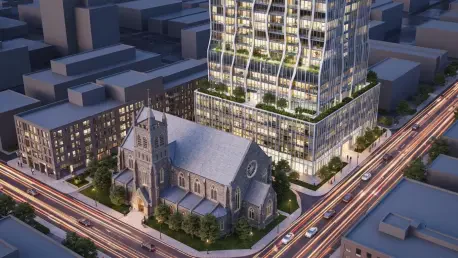
At the core of this ambitious urban experiment is a meticulously orchestrated integration of three distinct but interconnected components, all designed by Revery Architecture. The most visually striking element is “The Butterfly,” a 57-story residential skyscraper soaring 556 feet and containing 330 market-rate condominiums. This modern structure, however, does not stand in isolation. It is physically and programmatically woven into the fabric of the landmark First Baptist Church, a majestic 1911 Gothic Revival building that has undergone an extensive restoration, seismic retrofitting, and thoughtful expansion. Completing this trifecta is a seven-story social housing building, a direct and tangible response to the city’s pressing need for affordable homes. This third building provides 61 essential rental units, with 20 designated for below-market rates and 41 offering rent geared to income, ensuring that the development serves a diverse cross-section of the community. Together, these elements form a single, cohesive entity that challenges conventional notions of mixed-use development by merging market housing, social support, and spiritual heritage.
The project’s true innovation lies not just in its co-location of diverse functions but in its deliberate cultivation of a shared community. A central public galleria acts as the development’s vibrant heart, providing a unified and welcoming entry point for the church congregation, tower residents, and social housing tenants alike. This thoughtfully designed nexus fosters daily, organic interactions among all who pass through it, breaking down the invisible walls that often separate different socioeconomic groups in urban settings. Branching off from this central hub is an impressive array of shared amenities designed to serve the entire community, including a 37-space daycare, a modern gymnasium, a cozy café, and versatile multipurpose rooms. Furthermore, a new counseling center continues the First Baptist Church’s long-standing legacy of outreach and support. This integrated design empowers the church to expand its vital community services, such as providing meals and shelter to those in need, within a facility that is both historically significant and equipped for the demands of the 21st century.
Architectural Innovation and Sustainable Design
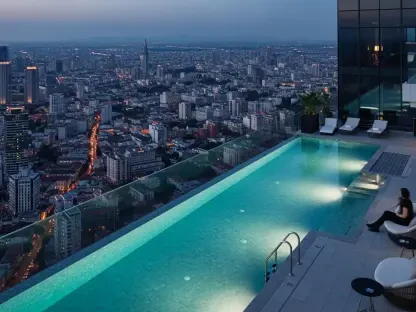
The architectural expression of The Butterfly tower is a masterclass in form meeting function, creating a new landmark on the Vancouver skyline. Its distinctive, undulating facade draws inspiration from the gentle, organic forms of clouds and the graceful movement of butterflies, lending a sense of lightness and dynamism to the towering structure. This complex, sculpted exterior was realized through the sophisticated use of advanced prefabricated panels and high-performance glazing, which not only create a stunning visual effect but also significantly enhance the building’s thermal resistance and acoustic performance. Expansive private balconies are seamlessly integrated into the facade’s curves, providing residents with comfortable outdoor spaces and contributing to the overall design language. Complementing this are outdoor sky gardens thoughtfully placed on each residential floor, which promote natural cooling and ventilation while offering residents a vital connection to nature amidst the dense urban environment. Capping the tower’s impressive features is a remarkable 50-meter swimming pool, enclosed by elegant, prefabricated structural ribs that create a light-filled, cathedral-like space for recreation.
Beyond its striking appearance, the entire complex is underpinned by a profound commitment to environmental stewardship, with the ambitious goal of achieving LEED Gold certification. The project was designed to significantly exceed Vancouver’s stringent building requirements, aiming to slash operational carbon by an impressive 68% and reduce overall energy use by 45%. This remarkable efficiency translates into an estimated 25% reduction in energy costs, a benefit achieved largely through the implementation of an onsite low-carbon energy plant that serves the entire complex. This forward-thinking approach to energy minimizes the development’s environmental footprint while ensuring long-term operational savings. The commitment to sustainability extends to water conservation, with a robust water management strategy in place to drastically reduce the consumption of potable and domestic water. This holistic approach to design ensures that the complex not only serves its community socially and culturally but also acts as a responsible and resilient model for sustainable urban development.
A New Model for Urban Cohesion
Ultimately, the Butterfly and First Baptist Church complex demonstrated a pioneering path forward for urban development. It successfully proved that the often-conflicting goals of heritage preservation, high-density residential living, and comprehensive social programming could be not just accommodated but synergistically combined into a cohesive and thriving whole. The project went beyond simply placing different buildings next to one another; it wove them into a single, integrated community fabric, fostering a sense of shared space and purpose. By leveraging the assets of a private development to restore a historic landmark and fund vital social housing and community services, it offered a replicable and innovative solution to the multifaceted challenges confronting modern cities. This development stood as a powerful example of how thoughtful, human-centered design could create an environment that was at once beautiful, sustainable, equitable, and deeply connected to its historical roots, providing a compelling blueprint for how future cities might be built.