
California is currently standing at a pivotal crossroads, grappling with a post-pandemic reality that has left its urban cores filled with empty desks and its residents struggling to find affordable homes. The concept of converting underutilized office space into vibrant residential units has moved beyond a niche architectural experiment to become a cornerstone of state and local policy. As major hubs like San Francisco and Los Angeles face record-high commercial vacancy rates, the office-to-housing boom represents a strategic effort to revitalize downtown districts while addressing the state’s chronic housing shortage. This analysis explores the legislative shifts, economic hurdles, and emerging models that are defining this ambitious urban transformation.
The Evolution of Urban Space in a Post-Pandemic California
The current push for adaptive reuse is rooted in a dramatic shift in how society interacts with the workplace. For decades, California’s urban centers were designed around a commuter model that prioritized massive commercial footprints. However, the rise of remote and hybrid work has permanently altered this landscape. San Francisco’s office vacancy rate recently peaked at nearly 33%, with Los Angeles trailing closely at 25%. This surplus of commercial real estate is not merely a temporary market dip but a structural change that requires a total rethink of city planning.
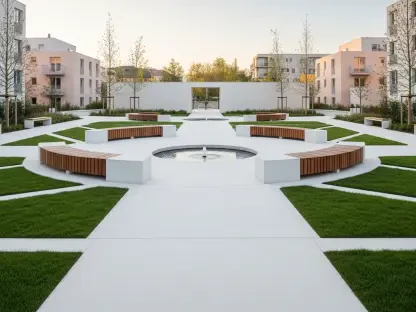
Historically, adaptive reuse was reserved for charming, century-old warehouses, but the sheer volume of modern, vacant high-rises has forced a re-evaluation of the entire urban infrastructure. This transition represents more than a real estate adjustment; it is an overhaul of the traditional American downtown. By reclaiming these spaces for residents, cities hope to create “eighteen-hour” environments where people live, work, and recreate in the same vicinity, reducing the reliance on long commutes and traditional office culture.
Navigating the Complexities of Adaptive Reuse
The Los Angeles Model: Legislative Flexibility
Los Angeles has taken a proactive stance by implementing the Citywide Adaptive Reuse Ordinance (ARO), which serves as a potential blueprint for other metropolitan areas. By reducing the eligibility age for buildings to just 15 years, the city has opened the door for contemporary structures to be repurposed. This ordinance removes traditional zoning barriers, allowing developers to look at parking structures and public facility zones as viable sites for housing. The shift acknowledges that the “work-play-live” balance requires a more integrated approach than the rigid commercial zoning of the past.
The Friction: State Mandates and Project Viability
While local cities innovate, state-level efforts like Assembly Bill (AB) 2011 and Senate Bill (SB) 6 have met with more complicated results. These laws intended to bypass lengthy environmental reviews and rezoning processes to fast-track housing. Despite this, the inclusion of strict labor requirements and high affordable housing quotas has made many projects financially difficult for private developers. The limited number of approvals under these bills highlighted a significant disconnect: while the legislative intent is to foster growth, the high cost of compliance can stall the very projects the state hopes to encourage.
Overcoming Roadblocks: Structural and Technical Realities
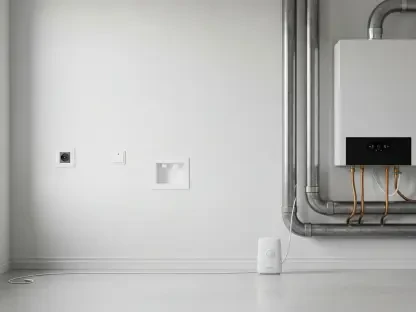
Beyond policy, the physical reality of these buildings presents a daunting challenge. Converting a deep-floor-plate office building into apartments often leaves interior spaces without windows, requiring creative architectural “carvings” or light wells. Furthermore, seismic safety is a non-negotiable factor in California. When a building changes its occupancy type from office to residential, it must often meet the latest, most stringent earthquake codes. These upgrades, combined with the lack of existing residential infrastructure like gas lines or individual HVAC systems, contribute to a high per-unit cost that frequently exceeds $600,000.
Emerging Economic Solutions and the Future of Downtown
As the industry matures, new financial mechanisms are emerging to bridge the gap between architectural vision and economic reality. The rise of downtown revitalization districts is one such innovation, utilizing tax increment financing (TIF) to leverage future property tax gains to pay for current construction costs. This allows cities to reinvest in themselves without immediate drains on the general fund. We are also seeing a shift toward modular conversions, where prefabricated residential units are inserted into existing steel frames to lower costs and speed up delivery times.
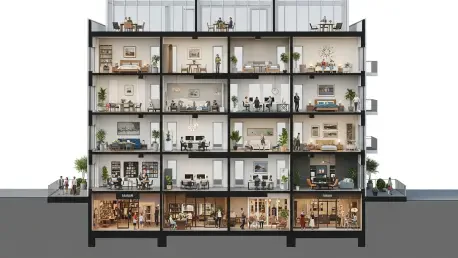
Market experts predict that the coming years will see a move toward mixed-use vertical neighborhoods. In this model, a single high-rise might host retail on the ground floor, boutique office space in the middle, and apartments on the top tiers. Such diversification ensures the building remains resilient to future market shifts. This hybrid approach caters to the modern professional who seeks flexibility, blending the amenities of a high-end office with the comfort of a luxury residence, all within the same vertical footprint.
Strategies for a Successful Urban Transition
For these conversions to truly boom, a multi-faceted approach was required. Policy makers had to find a middle ground on labor stipulations to ensure that project costs remained manageable, while developers prioritized buildings with conversion-friendly floor plans to maximize efficiency. Best practices suggested that successful projects often leveraged AB 2097, which eliminated costly parking requirements near transit hubs, allowing developers to use that space for additional housing units instead. This shift not only lowered costs but also promoted a more sustainable, transit-oriented lifestyle.
Investors and professionals realized that the most viable projects were those that aligned closely with local incentives and utilized modern seismic-retrofitting technologies to keep insurance and construction costs in check. The integration of smart-building technology also played a role, as these older shells were outfitted with modern energy-efficient systems to meet California’s rigorous environmental standards. Success depended on a partnership between public entities providing the regulatory “carrots” and private firms providing the technical expertise to execute complex renovations.
Redefining the California Dream Through Adaptive Reuse
The transformation of California’s office towers into residential communities represented a necessary evolution for the 21st-century city. While high construction costs and regulatory bottlenecks remained significant hurdles, the political and social will to solve the housing crisis proved stronger than the status quo. By aligning financial subsidies with flexible zoning and innovative engineering, California led the nation in urban renewal. The success of this conversion boom was ultimately measured by its ability to turn silent, empty corridors into thriving, inclusive neighborhoods that reflected the changing needs of its people.
Future considerations must now focus on ensuring these new residential hubs remain accessible to a diverse range of income levels. Long-term sustainability will require ongoing monitoring of urban density and the provision of essential services, such as schools and grocery stores, within these former commercial districts. As the state moved forward, the lessons learned from these high-rise conversions provided a framework for other global cities facing similar commercial vacancies. The transition from monolithic office blocks to dynamic, lived-in spaces became the defining architectural achievement of the decade.