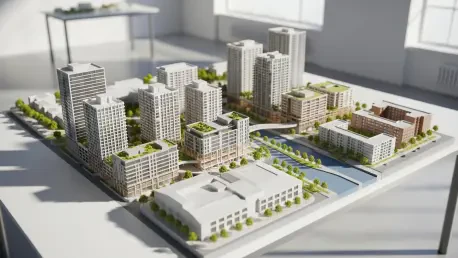

The transformation of derelict industrial landscapes into thriving urban centers represents one of the most significant challenges and opportunities in modern city planning, a process vividly illustrated by the ambitious redevelopment of post-industrial sites.
Setting the Stage: From Industrial Relics to Vibrant Communities
At the forefront of this movement is developer Ballymore, known for its successful Royal Wharf regeneration, which is now spearheading the Thames Road project. This initiative, designed by the architectural firm Howells, serves as a central case study for examining the nuances of urban renewal. Ballymore’s role is pivotal, driving a large-scale transformation, while Howells is tasked with the creative challenge of weaving a new community into the historical fabric of the area.
The core concepts at play are distinct yet interconnected. A brownfield site, such as the Thames Road industrial plot, is previously developed land that has fallen into disuse and may require environmental remediation before it can be repurposed. In contrast, a new neighborhood is a planned community built from the ground up. In this context, Ballymore’s vision for Thames Road is not merely to construct buildings but to create a comprehensive, mixed-use neighborhood on this reclaimed land, establishing a new identity for a forgotten piece of the city.
The Development Blueprint: A Head-to-Head Comparison
Land Use and Housing Diversity
Brownfield redevelopment inherently fosters high-density, mixed-use environments by necessity and design. The Ballymore plan for Thames Road exemplifies this potential, integrating 1,685 new homes—including 173 for social rent and 359 co-living suites—with over 13,500 square meters of light industrial and workspace. This strategy creates a dynamic live-work ecosystem within a compact footprint.
Conversely, traditional new neighborhoods, often built on undeveloped greenfield land, tend toward homogeneity. These projects frequently segregate residential zones from commercial or industrial areas, resulting in a less integrated urban fabric. The approach at Thames Road, however, deliberately blends these elements, transforming an industrial relic into a multi-layered community.
Infrastructure and Community Integration
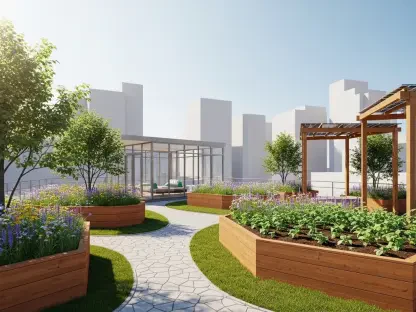
The regeneration of a brownfield site often acts as a catalyst for significant public infrastructure investment. Ballymore’s approved scheme for Thames Road directly incorporates vital community assets, including a new primary school, a scenic riverside park, and numerous ground-floor retail and community spaces. This method not only serves the incoming population but also revitalizes the surrounding area for existing residents.
Traditional new neighborhood development on the urban fringe may necessitate costly and disruptive extensions of municipal services like roads and utilities into previously unserved areas. The Thames Road project, by leveraging its position within an established urban setting, can instead focus resources on creating self-sustaining community hubs that enhance the existing infrastructure.
Design Philosophy and Economic Impact
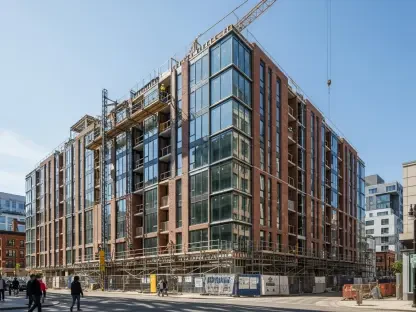
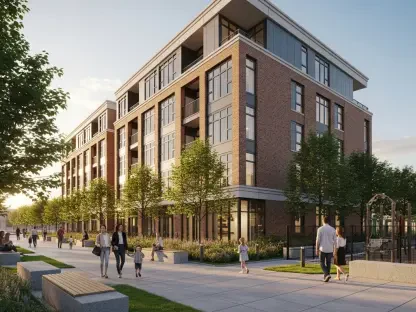
The design philosophy for the Thames Road project, guided by Howells, consciously honors the industrial heritage of the Royal Docks. This is achieved through a diverse palette of brick and varied architectural forms, from classic mansion blocks to contemporary co-living structures, creating a rich visual narrative that connects the past with the present.
Economically, this project represents a long-term investment strategy, building on Ballymore’s proven success with the Royal Wharf regeneration. This model turns neglected land into a high-value community asset. In contrast, the economic model for a typical new neighborhood is often more straightforward, focusing on land acquisition and new construction, but it lacks the profound value-add of urban renewal and historical preservation inherent in brownfield projects.
Navigating the Hurdles: Challenges and Considerations
Developing on a brownfield site presents a unique set of obstacles. The primary challenge often lies in navigating a complex planning process, as Ballymore experienced with the London Borough of Newham. Other significant hurdles include the potential for land contamination, which requires costly and time-consuming remediation, and the architectural difficulty of integrating modern designs with existing urban infrastructure while preserving historical character.
While the Thames Road project is technically a new neighborhood, its brownfield nature helps it avoid the chief criticism leveled at greenfield developments: urban sprawl. The key challenge here shifts from land use to place-making. The developer must foster a genuine sense of community and identity from scratch, ensuring the new neighborhood becomes a connected, vibrant part of the city rather than an isolated enclave.
The Final Verdict: Choosing the Path for Urban Growth
The comparison between these two development models highlighted that brownfield redevelopment, as demonstrated by Ballymore’s Thames Road project, offered a sustainable and integrated model for urban growth. It revitalized underused land, promoted high-density, mixed-use living, and created cohesive communities, standing in contrast to traditional new neighborhoods that could contribute to sprawl and lack the layered character of a regenerated site.
For achieving sustainable urban densification, brownfield projects proved to be the superior choice. The Ballymore scheme at Thames Road is a blueprint for accommodating a growing population by transforming industrial land into a thriving community without expanding the city’s physical footprint. For integrated community building, the model of combining diverse housing, workspaces, schools, and parks was recommended. Ballymore’s ongoing commitment, underscored by its pending application for the sister site at Knights Road, showed how this approach could be scaled for lasting regional transformation.