
The vast networks of steel and concrete that span our nation’s waterways and valleys represent a monumental achievement in engineering, yet many of these vital links are now reaching the end of their intended lifespans. For the authorities tasked with their stewardship, this presents a critical dilemma at the crossroads of infrastructure renewal. They must weigh two primary strategies—a complete replacement or a comprehensive rehabilitation—to ensure these arteries of commerce and community remain safe and functional for generations to come. This choice is not merely technical; it carries profound financial, social, and long-term implications that shape the future of regional connectivity and public safety. The decision between building anew and restoring the old is central to addressing the nationwide challenge of deteriorating bridges, defining how we invest in and preserve our most critical infrastructure.
A Head-to-Head Comparison of Key Factors
Financial Implications Upfront Costs vs. Long-Term Value
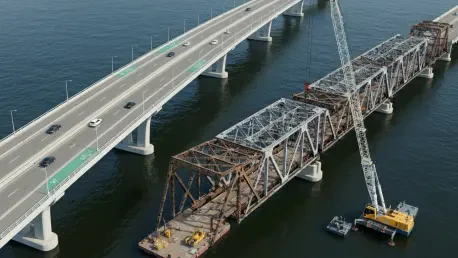
The most immediate and often decisive factor in the debate between replacement and rehabilitation is cost. A full replacement, such as the recently completed $232 million Unionport Bridge in New York City, represents a significant upfront capital investment. This expenditure covers everything from demolition and site preparation to the construction of a brand-new structure engineered with modern materials and methods. In contrast, rehabilitation projects typically carry a lower initial price tag. The $138 million restoration of Chicago’s historic Lake Street Bascule Bridge, for instance, offered a more financially accessible path to extending the asset’s life without the massive outlay required for a total rebuild.
However, the initial investment tells only part of the story. Lifecycle cost analysis provides a more complete financial picture, factoring in future maintenance, inspections, and overall service life. A new bridge is generally designed for a service life of 75 years or more, requiring predictable, routine maintenance. The Unionport Bridge replacement, for example, not only solved an immediate structural problem but also reset the clock on the asset’s lifespan. Rehabilitation, while less expensive at the outset, extends the life of an existing structure by a more limited period, often 25 to 40 years. The repaired bridge may also demand more frequent or intensive inspections and interventions, potentially leading to higher cumulative costs over the long term.
Project Execution Timeline and Community Disruption
The duration of a project and its impact on the public are critical considerations. Full bridge replacements are extensive undertakings that can span many years. The Unionport Bridge project required eight years from its start in 2017 to its completion, a timeline reflecting the complexities of demolition, new construction, and systems integration in a dense urban environment. Such long-term projects can cause significant and prolonged disruption to daily life and commerce.
To manage this impact, project planners often employ sophisticated strategies like phased construction. At the Unionport Bridge, a carefully orchestrated 10-phase approach allowed both vehicular traffic on the Bruckner Expressway and maritime traffic on Westchester Creek to continue flowing throughout the construction period. Rehabilitation projects, while often shorter, present their own set of challenges. Work must be conducted on or around an active structure, frequently requiring lane closures, night work, and temporary detours. While the overall disruption may be for a shorter period, the proximity of the work to active traffic can create unique safety and logistical hurdles.
Engineering and Functional Outcomes Modernization vs. Restoration
The final outcome of each approach differs fundamentally in scope and capability. A replacement project offers the opportunity for a complete modernization that addresses not just structural integrity but also functional obsolescence. The new Unionport Bridge is a testament to this, featuring not only a modern double-leaf bascule design but also a dedicated pedestrian walkway and a protected bike lane. These upgrades accommodate modern traffic demands and multi-modal transit, bringing the infrastructure in line with contemporary community needs for safety, accessibility, and capacity.
Rehabilitation, by its nature, is focused on restoration. Its primary goal is to return a bridge to a state of good repair, reinforcing its existing structural components and updating key systems. However, a rehabilitated bridge is largely constrained by its original design. While it may be stronger and safer, it often retains outdated features like narrow lanes, low vertical clearances, or an inability to support higher load capacities. For a structure like the historic Lake Street Bridge, this approach preserves its character but may not resolve underlying issues of functional obsolescence that can limit its utility in a modern transportation network.
Inherent Challenges and Strategic Considerations
Each strategy comes with its own distinct set of challenges that must be navigated. For rehabilitation, the primary risk lies in the unknown. Engineers can conduct extensive inspections, but crews often uncover unforeseen deterioration once work begins, leading to scope changes, budget overruns, and project delays. Furthermore, working within the confines of an old design can be limiting, and in the case of historic structures, preservation requirements can add layers of complexity and cost, dictating which materials and methods are permissible.
In contrast, the challenges of a full replacement are often logistical and administrative. These massive projects typically require a complex and lengthy environmental permitting process to address their significant impact on the surrounding area. Acquiring the necessary land or right-of-way can be a complicated and politically sensitive endeavor, particularly in developed urban centers. Above all, the logistical task of managing traffic during a total rebuild is immense, demanding intricate planning to minimize the economic and social disruption caused by rerouting a major transportation artery.
Conclusion Charting the Path Forward for Critical Infrastructure
The comparative analysis of bridge replacement and rehabilitation revealed a complex balance of trade-offs. The decision-making process was shown to pivot on a careful evaluation of upfront costs versus long-term value, immediate public disruption versus lasting functional benefits, and the opportunity for modernization against the constraints of restoration. Each path presented a unique set of financial, logistical, and engineering considerations that authorities had to weigh.
Ultimately, the choice between these two strategies was guided by the specific condition and context of the bridge in question. Rehabilitation stood out as the logical choice for structures with sound underlying foundations or significant historical value, where the goal was to extend service life cost-effectively. Conversely, replacement was identified as the necessary course of action for bridges that were either structurally deficient, functionally obsolete, or fundamentally incapable of meeting the projected traffic and community demands of the future.