
Luca Calarailli is a distinguished expert in construction and urban development, renowned for his ability to merge complex architectural design with cutting-edge technological innovation. With a career dedicated to high-impact urban renewals, he has become a leading voice in how integrated developer-contractor models can reshape modern cities. His work on large-scale residential projects emphasizes not just structural integrity, but the vital intersection of sustainability and community-led design. In this conversation, we explore the intricacies of the Tustin Estate regeneration, discussing the technical hurdles of carbon reduction, the nuances of inclusive design, and the logistical strategy required to revitalize a 1960s estate into a vibrant, future-proof neighborhood.
The discussion covers the evolution of the project from its democratic origins in a resident ballot to the technical achievement of a 94% carbon reduction through district heating. We delve into the importance of a resident-driven manifesto, the specific architectural choices that support wheelchair independence, and the unique efficiencies gained by serving as both developer and contractor. Furthermore, the interview highlights the integration of social infrastructure, such as the new Pilgrim’s Way Primary School, and the delicate balance of retrofitting existing terrace housing to ensure a cohesive, modernized community.
Moving from a 1960s estate to a modern development requires significant community buy-in. How did the resident ballot process influence your early design choices, and what specific mechanisms ensured that the community’s manifesto remained the guiding document throughout the construction of these first 167 homes?
The resident ballot in February 2021 was the foundational moment of this project, as it gave us a clear mandate for comprehensive renewal based on trust rather than top-down imposition. This democratic process led to the creation of the Tustin Estate Residents’ Manifesto, a document that acted as our North Star during the design of the first 167 homes. We didn’t just file this away; we established the Tustin Resident Project Group and held weekly drop-in sessions to ensure the community’s voice was heard in real-time. By involving residents in design workshops and monthly updates, we ensured that the final buildings weren’t just “units,” but a physical realization of the community’s vision for a safer and more vibrant neighborhood.
Achieving a 94% reduction in carbon emissions involves complex technical integration. What were the primary engineering challenges of connecting homes to a local waste-to-energy district heating network, and how do you balance high-insulation building fabrics with the need for modern architectural aesthetics?
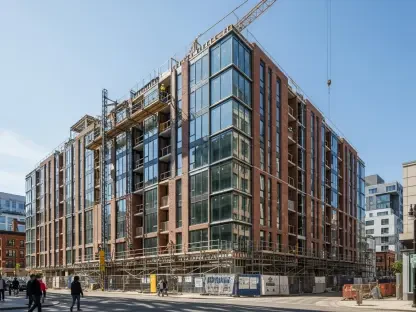
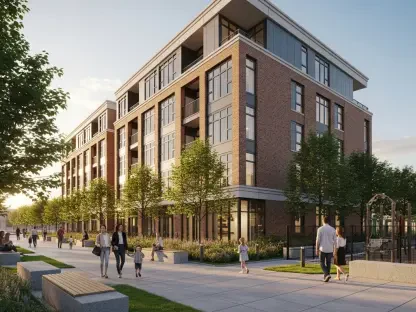
The ambition to hit a 94% reduction in carbon emissions required a sophisticated shift in how we think about energy infrastructure, specifically by plugging into a local energy-from-waste district heating network. Engineering these connections within an active 1960s estate meant navigating a labyrinth of existing subterranean utilities while ensuring the new high-insulation building fabric maintained a sleek, contemporary look. We worked closely with architects from dRMM, Adam Khan, and JA Projects to ensure that the thick, energy-efficient walls didn’t result in bulky or unattractive facades. The result is a series of buildings that feel light and modern but perform at an incredibly high thermal standard, effectively future-proofing the estate against rising energy costs.
Housing design must accommodate diverse physical needs, particularly for residents requiring specialized kitchen and living layouts for wheelchair independence. Could you walk through the specific accessibility features implemented in Phase 1 and explain how these internal modifications change the daily lives of residents?
Accessibility was a primary pillar of our design strategy because we knew that for residents like Lee and his wife, these modifications are truly life-changing. We moved beyond standard compliance by integrating specialized kitchen and living layouts that allow wheelchair users to navigate their homes with total independence. This included specific counter heights, widened doorways, and open-plan configurations that remove the physical barriers common in older 1960s stock. For a resident who hasn’t been able to cook a meal in years due to a restrictive layout, being able to access the stove or sink independently restores a profound sense of dignity and agency.
Operating as both developer and contractor creates unique efficiencies during large-scale urban renewals. How does this integrated model streamline workflows for the upcoming 284 homes in Phase 2, and what practical steps are taken to minimize disruption for families currently living on-site?
Acting as both developer and contractor allows us to collapse the traditional silos that often lead to delays and miscommunication in large-scale projects. For the upcoming 284 homes in Phase 2, this integrated model means we can synchronize the planning and construction phases much more tightly, ensuring that our technical teams and site managers are working from the same playbook from day one. To minimize disruption for the families staying on-site, we implement strict logistical workflows and maintain constant communication through our project managers. We treat the estate as a living environment, not just a construction site, which means being proactive about noise mitigation and maintaining safe, clear pedestrian routes throughout the build.
Integrating a new primary school as a central pavilion within a residential estate requires careful spatial planning. How does the placement of the school foster a sense of community safety, and what role will the 1,800 square meters of commercial space play in the local economy?
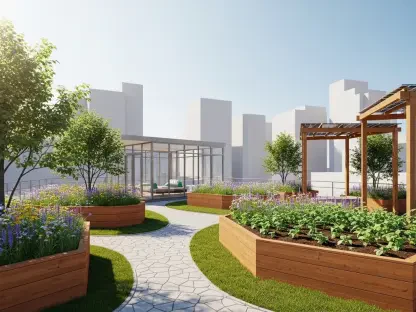
The decision to place the new Pilgrim’s Way Primary School as a central pavilion within a garden setting is a deliberate move to create a “beating heart” for the estate. This placement naturally increases foot traffic and passive surveillance, which are key components in fostering a long-term sense of community safety and belonging. Complementing this, the 1,800 square meters of commercial floorspace will act as an economic engine, providing opportunities for local businesses and services that the estate previously lacked. By mixing education, commerce, and high-quality landscaping like the Tustin Common, we are creating a self-sustaining ecosystem where residents can live, work, and learn in one cohesive space.
Large-scale regeneration projects often include the refurbishment of existing terrace housing alongside new builds. What are the technical trade-offs when upgrading older council-owned structures to meet modern efficiency standards, and how do you ensure these older homes feel cohesive with the new landscape?
Upgrading the existing council-owned terrace housing at Manor Grove presented a unique set of challenges, as we had to balance the charm of the original structures with the rigorous efficiency standards of the new builds. The main technical trade-offs involve working within the constraints of older building envelopes, where installing modern insulation and ventilation systems requires a much more bespoke approach than a “blank slate” new build. To ensure aesthetic cohesion, we utilized a palette of materials and landscaping elements that bridge the gap between the old and the new. This ensures that the refurbished terraces don’t feel like an afterthought, but rather an integral, modernized part of the refreshed Tustin landscape.
What is your forecast for the Tustin Estate regeneration?
My forecast for the Tustin Estate is that it will serve as the definitive blueprint for how London handles large-scale social housing renewals over the next decade. By the time we reach the final goal of 690 homes in 2030, this project will have proven that high-density urban living can be both incredibly sustainable and deeply rooted in community democracy. We are seeing a shift where the success of a development is measured not just by the number of keys handed over, but by the measurable social value and carbon savings achieved. Tustin will be remembered as the project that prioritized the “replacement first” model, ensuring that existing residents aren’t just witnesses to change, but the primary beneficiaries of a greener, safer, and more inclusive neighborhood.