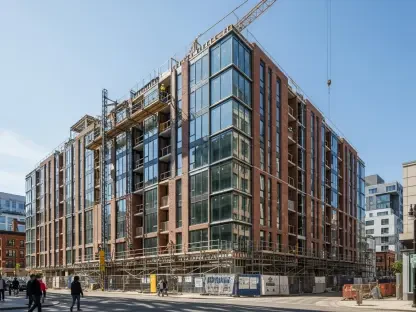

The architectural silhouette of American cities is undergoing a profound metamorphosis as Black-owned firms transition from traditional design roles to become sophisticated masters of urban infrastructure and corporate strategy. This evolution is not merely about aesthetic shifts but represents a fundamental change in how large-scale public projects are conceived, funded, and executed across the country. These firms have successfully moved beyond the limitations of boutique creative studios to navigate the labyrinthine worlds of government procurement, multi-layered financing, and institutional management. By proving their technical proficiency in high-stakes sectors such as aviation, healthcare, and higher education, they have ensured that the physical landscape of the nation reflects a diverse range of voices and expertise. These entities are now the primary drivers of projects that serve the public interest for generations, demonstrating that representation in the built environment is inextricably linked to the operational excellence required to manage billion-dollar infrastructure portfolios in 2026.
Giants of National Scale and Historical Legacy
Leading the industry in terms of sheer scale and volume is Moody Nolan, which has solidified its position as the largest Black-owned architecture firm in the United States through decades of steady growth. With a workforce of over 350 professionals distributed across a dozen national offices, the firm manages nearly a billion dollars in annual construction value, a testament to its massive operational capacity. Their portfolio is characterized by deep engagement with institutional stability, featuring landmarks like the International African American Museum and major healthcare facilities. This level of scale allows the firm to compete for the most prestigious and complex contracts, proving that Black-managed entities can operate at the pinnacle of the professional hierarchy. Their success is built on a foundation of technical rigor and the ability to maintain long-term relationships with diverse clients, ranging from municipal governments to global corporations, ensuring that their influence on the American landscape remains both permanent and highly visible.
Equally significant to the national narrative is the historical lineage and modern dominance of McKissack & McKissack, a firm that traces its roots back to 1905. As the oldest Black-owned architecture and construction firm in the country, it represents a century of resilience and professional evolution that has culminated in a powerhouse of program management. Under its current leadership, the firm oversees a staggering $15 billion in active projects, including iconic landmarks such as the National Museum of African American History and Culture and the Martin Luther King, Jr. Memorial. These projects do more than just occupy space; they define the symbolic and physical core of the nation’s capital, serving as a constant reminder of the firm’s role in shaping American identity. By integrating construction services with architectural design, the firm has created a resilient business model that thrives in the competitive landscape of 2026, where the ability to manage complex, multi-billion-dollar budgets is just as critical as the initial creative vision.
Revitalizing Communities Through Purposeful Design
Regional leaders like KAI Enterprises, based in St. Louis, demonstrate how the integrated design and build model can be leveraged as a powerful tool for achieving social and economic equity. Founded by the first Black licensed architect in Missouri, the firm has grown to employ over 160 specialists who focus on projects that serve as catalysts for neighborhood transformation. A remarkable 60 percent of the firm’s projects are situated in historically underserved communities, a deliberate strategic choice that utilizes high-level architecture to drive local revitalization. Their current involvement in the National Juneteenth Museum and significant airport expansions highlights a unique versatility, moving seamlessly between cultural storytelling and the rigid technical requirements of transit infrastructure. This mission-driven approach proves that architectural excellence does not have to be divorced from social responsibility; instead, the two can coexist to create spaces that empower residents while meeting the highest standards of modern engineering.
In Memphis, Self + Tucker Architects has spent three decades refining a practice that views the revitalization of urban environments as its primary objective. Their work is deeply rooted in the preservation of history and the strengthening of neighborhoods, particularly through the restoration of historic sites like the Melrose School and their ongoing contributions to the National Civil Rights Museum. By focusing on the intersection of heritage and growth, the firm ensures that the evolution of the city does not come at the expense of its cultural memory. Their practice demonstrates that architecture can serve as a vital bridge between a community’s past and its future economic potential, fostering a sense of place that is both modern and historically grounded. This focus on urban preservation is critical in 2026, as cities grapple with the challenges of gentrification and the need for sustainable, inclusive development that respects the lived experiences of long-term residents while attracting new investment.
Breaking Barriers in Specialized Technical Fields
The evolution of the architectural profession is also marked by firms that have shattered gender and regional glass ceilings while mastering highly technical and secure niches. WDI Architecture in Indianapolis stands as a prominent pioneer in this regard, being the first firm in its city owned and operated by a Black woman. Rather than sticking to traditional residential or commercial design, the firm has established a formidable reputation in specialized sectors such as aviation and emergency operations centers. These fields require an extraordinary level of technical competence and an understanding of complex security protocols, proving that Black-owned firms are fully competitive in sectors with the most rigorous performance requirements. By focusing on these high-security environments, the firm has carved out a unique market position that emphasizes reliability and technical sophistication. This success highlights the importance of diversity in technical leadership, ensuring that the critical infrastructure of our cities is designed with a broad range of perspectives.
Similarly, Rhodes + Brito Architects has become a dominant force in the Florida market, maintaining a significant concentration of licensed Black architects to lead massive educational and civic projects. The firm manages a portfolio valued at approximately $700 million, specializing in K-12 and higher education design where the demands for durability and functional efficiency are paramount. Their leadership in the Southeastern United States illustrates the vital role of regional hubs in fostering diversity within the architectural profession and providing a template for success in high-growth markets. By consistently delivering projects that meet the exacting standards of school boards and university regents, the firm has proven that technical specialization is a key driver of institutional longevity. Their ability to navigate the complex regulatory and budgetary constraints of public education projects in 2026 underscores the sophisticated management capabilities that define modern Black-owned practices, further cementing their status as essential contributors to the state’s social infrastructure.
Strategic Excellence and Institutional Longevity
The sustained success of these prominent firms is rooted in their institutional longevity and their uncanny ability to foster deep-rooted professional relationships over several decades. By diversifying their service offerings to include program management, engineering, and general contracting, these businesses have built a buffer against economic volatility while maintaining the capacity to handle massive public contracts. This multi-layered approach allows them to navigate the procedural rigor and bureaucratic complexity required by large-scale municipal developments. Whether through century-old family legacies or the steady expansion of modern startups, these firms have established the trust necessary to act as lead consultants on projects that define the public realm. This strategic excellence ensures that they remain essential partners for major universities, hospitals, and civic institutions nationwide, providing a level of stability and expertise that is often unmatched by smaller, less diversified competitors in the current 2026 architectural marketplace.
Furthermore, the rise of these firms is a direct result of their ability to master the intricate worlds of government procurement and institutional client management. Success in these arenas requires more than just design talent; it demands a sophisticated understanding of how policy, finance, and community engagement intersect. By positioning themselves as corporate leaders who can manage the entire lifecycle of a project, from initial feasibility studies to final construction oversight, these firms have become indispensable to the functioning of modern cities. They act as the technical backbone for infrastructure that millions of people rely on daily, ensuring that hospitals are efficient, airports are secure, and schools are conducive to learning. This level of involvement in the fundamental systems of society proves that Black-owned architecture firms are no longer operating on the margins but are central to the economic and structural health of the nation, providing the technical and management expertise needed to build a more resilient future.
Redefining the Narrative of American Achievement
Despite the immense economic and cultural output of these firms, there has historically been a notable lack of mainstream editorial coverage documenting their contributions to the American landscape. Correcting this narrative is essential to understanding the full scope of architectural history and the technical sophistication required to shape contemporary urban environments. These firms are not merely participants in the construction industry; they are the architects of progress who ensure that the quality and durability of public infrastructure are tied to authentic representation. Their stories highlight a unified commitment to excellence and a refusal to be defined by the historical barriers that once sought to limit their participation in large-scale development. By documenting these achievements, the industry can better appreciate the rigorous standards and innovative strategies that Black-owned firms bring to the table, ensuring that their legacy is recognized as a cornerstone of American professional success.
Moving forward, the focus for the industry should shift toward institutionalizing the pathways that allowed these firms to reach such impressive scales of operation. Practical next steps include expanding mentorship programs that pair established corporate leaders with emerging practices to share insights on navigating complex procurement systems and securing large-scale financing. Educational institutions must also play a role by highlighting the business and management aspects of architecture, preparing the next generation of professionals to lead multi-disciplinary firms. The success of entities like Moody Nolan and McKissack & McKissack demonstrated that the integration of design, management, and community advocacy was the most effective strategy for long-term growth. Future developments will likely see an even greater emphasis on firms that can provide turnkey solutions for civic infrastructure, making the diversification of services a mandatory requirement for those seeking to shape the American landscape. These firms successfully proved that diversity in leadership leads to more resilient and inclusive public spaces.