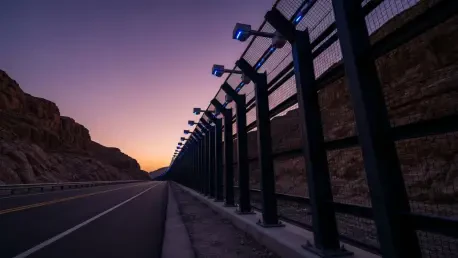

A Tennessee-based construction firm has just become a central figure in one of the nation’s most significant and complex infrastructure undertakings, securing contracts worth an astonishing two billion dollars. This massive award to AIS Infrastructure for border security projects raises a crucial question about the direction of federal strategy: what does this level of investment in a single company signify for the future of U.S. border management? This development is not an isolated event but a key part of a much larger, ongoing federal initiative to modernize and reinforce the nation’s southern border through large-scale civil engineering.
The sheer scale of the award positions AIS Infrastructure as a primary partner in a national security endeavor, highlighting a strategic reliance on private sector expertise to execute complex public works. The contracts represent a significant vote of confidence from the federal government, entrusting the firm with critical components of a multi-state security network. This move underscores a clear policy direction toward robust, physical infrastructure as a cornerstone of border control.
Situating the Award Within a Thirty Nine Billion Dollar Program
These contracts, while substantial, are a fraction of a much larger federal allocation. The Department of Homeland Security (DHS) has earmarked a total of $39 billion for its comprehensive border infrastructure plan, creating a highly competitive environment for the nation’s leading construction and engineering firms. This extensive funding pool is designed to attract companies with proven track records in managing large-scale, logistically challenging design-build projects.
This strategic approach signals a definitive trend in federal procurement, moving toward partnerships with heavy civil construction firms capable of handling projects from initial design to final implementation. The government’s model favors contractors who can navigate difficult terrain, manage complex supply chains, and deploy advanced technology across vast geographic areas. The competitive landscape for these contracts is fierce, with experienced national contractors vying for a stake in one of the largest infrastructure programs in recent history.
A Coast to Coast Undertaking Across Four Landmark Contracts
The work awarded to AIS Infrastructure spans three states and is divided into four distinct, high-value contracts that address unique geographical and security challenges. The projects, which cover key sectors in California, Arizona, and Texas, represent a coordinated effort to create a more technologically advanced and physically imposing border presence. The engineering and design phase for all four projects is currently being led by the global firm HDR, setting the stage for a synchronized rollout.
The specifics of the contracts reveal a multifaceted approach. In Texas, the Del Rio sector will see two projects, DRT-1 and DRT-2, with a combined value of $929 million, focusing on new vertical and waterborne barriers, extensive patrol roads, and integrated security systems. In California, the $483 million SDC-1 contract in San Diego will tackle challenging mountain terrain, requiring the construction of vertical barriers and new access roads. The largest single award, the $606 million TCA-1 contract, covers the Tucson and Yuma sectors in Arizona, involving a mix of new barriers, upgrades to existing walls, and the development of sophisticated drainage and road networks. Fieldwork for these projects is slated to begin in January 2026, with an estimated construction period of 30 to 36 months for each.
The Power of Partnership in Securing the Border
AIS Infrastructure secured these monumental contracts not as a sole entity, but as the leader of a powerful joint venture. The work will be executed by its subsidiary, BCSS, in strategic partnership with Caddell Construction of Alabama and Gibraltar of Texas. This collaboration combines decades of experience in federal contracting, heavy civil construction, and regional expertise, creating a formidable team capable of managing the diverse demands of the four projects simultaneously.
This joint venture structure provides a significant strategic advantage, allowing the firms to pool resources, share risk, and leverage specialized skills tailored to each project’s unique requirements. The success of this bid solidifies AIS’s position as a dominant force in the federal construction market. The company’s momentum is further underscored by the fact that it has an additional $3.7 billion in similar border infrastructure contracts currently under federal review, signaling its central role in the program for years to come.
Ramping Up for the Operational and Economic Ripple Effect
To meet the demands of this nearly two-billion-dollar undertaking, AIS Infrastructure is preparing for a significant operational expansion. This ramp-up involves a major recruitment drive, with the company planning to hire between 350 and 400 new employees by March 2026. These new roles will span a range of skills, from heavy equipment operators and project managers to logistics coordinators and security personnel, injecting a substantial number of jobs into the regions surrounding the project sites.
Beyond the human resources effort, the mobilization plan includes the deployment of nearly 100 additional pieces of heavy equipment to the various sites across the three states. This massive logistical operation will have a considerable ripple effect on local and national economies. It will stimulate demand across the supply chain for raw materials like steel and concrete, as well as for specialized technology and support services. The successful award and subsequent mobilization plan marked a pivotal moment, cementing a new phase of intensive infrastructure development that redefined the landscape of federal contracting.