
The long-standing healthcare disparity affecting Chicago’s South Side is finally being addressed through a monumental architectural and medical undertaking that promises to redefine local patient care standards for the next century. This massive initiative centers on a $320 million replacement facility designed to modernize clinical services while phasing out the antiquated, 120-year-old Advocate Trinity Hospital. As part of a broader $1.1 billion capital commitment, this project represents a fundamental shift in how resources are allocated to historically underserved urban corridors. By moving operations to a state-of-the-art campus, the organization aims to bridge the gap between advanced medical technology and community accessibility. This development is not merely a construction project but a strategic pillar within a comprehensive health equity framework. The focus remains on establishing a sustainable healthcare ecosystem that can adapt to the evolving needs of the Far Southeast Side population while fostering economic growth in the surrounding neighborhoods.
Strategic Infrastructure: Building a Modern Medical Anchor
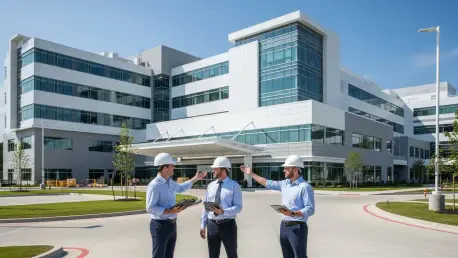
Situated prominently at 8000 DuSable South Lake Shore Drive, the new five-story facility occupies a 23-acre parcel that was previously vacant, signaling a major revitalization of the local landscape. The choice of location places the hospital near the emerging Illinois Quantum and Microelectronics Park, creating a synergy between high-tech industrial growth and essential public services. Architecturally, the 183,000-square-foot structure is designed to be both functional and environmentally conscious, featuring fifty-two inpatient beds and three advanced operating rooms to handle complex surgical cases. To accommodate staff and visitors, the plans include nearly 370 parking spaces, ensuring that the facility remains accessible to those traveling from various parts of the city. Beyond its medical capacity, the design incorporates bird-safe glass and native landscaping to protect local wildlife, while advanced stormwater management systems prevent runoff into nearby Lake Michigan.
The technical execution of this project relies on a high-profile construction team featuring a joint venture between Power Construction and Ujamaa as the general contractors. This partnership brings together large-scale expertise and local construction roots, which is essential for a project of this magnitude on the South Side. CannonDesign serves as the primary architect, while Magnusson Klemencic Associates and SR+A oversee the complex structural engineering requirements of the five-story build. With construction activities progressing from 2026 toward the anticipated completion in June 2029, the site has become a hub of logistical precision and safety-focused engineering. The development team has prioritized the use of sustainable materials and efficient building systems to reduce the overall carbon footprint of the hospital. These structural choices reflect a commitment to modernizing the regional healthcare infrastructure while ensuring the building remains resilient for decades.
Community Integration: Expanding Beyond Traditional Clinical Care
While the physical hospital serves as the anchor, the project is underpinned by a diverse investment strategy that extends medical services far beyond the traditional clinical walls. This includes a substantial five-hundred-million-dollar allocation toward establishing ten distinct Healthcare Neighborhood locations within existing community centers and local churches to provide immediate care access. Furthermore, approximately two hundred million dollars is earmarked for specialized chronic disease management and outpatient programs, which are critical for addressing the prevalent health issues found in the South Side. A significant twenty-five-million-dollar portion of the budget is dedicated to local workforce training, ensuring that the economic benefits of the project reach the residents via stable employment opportunities in the medical field. This multi-layered approach treats health as a product of both medical intervention and social stability, incorporating programs for food and housing assistance to ensure long-term wellness for the entire patient network.
The progression of this medical campus required extensive coordination with municipal authorities, resulting in successful approvals from the Chicago Plan Commission and the Illinois Health Facilities and Services Review Board. Once the new facility reached operational status in the late 2020s, the legacy Trinity Hospital on East 93rd Street was scheduled for demolition to provide vital green space for the community. City leaders emphasized that the successful integration of this hospital into the South Side depended on continuous dialogue between urban planners and local healthcare advocates. Stakeholders recommended that future phases of the project prioritize the expansion of mobile medicine units to reach residents who faced mobility challenges. These actions solidified a framework where modern infrastructure and community-based outreach functioned in tandem to eliminate historical barriers. By aligning construction timelines with broader economic development goals, the city established a new precedent for how healthcare investments could revitalize urban zones through targeted, funded interventions.